

Winter grit, mud, narrow drivetrains, and poor cleaning habits can shorten chain life. Use this estimator to decide when to measure chain wear instead of waiting for shifting problems.
Chain Wear Replacement Estimator
Estimate when to inspect or replace a chain based on miles, weather, drivetrain, and cleaning habits.
Use the Estimate to Decide When to Measure
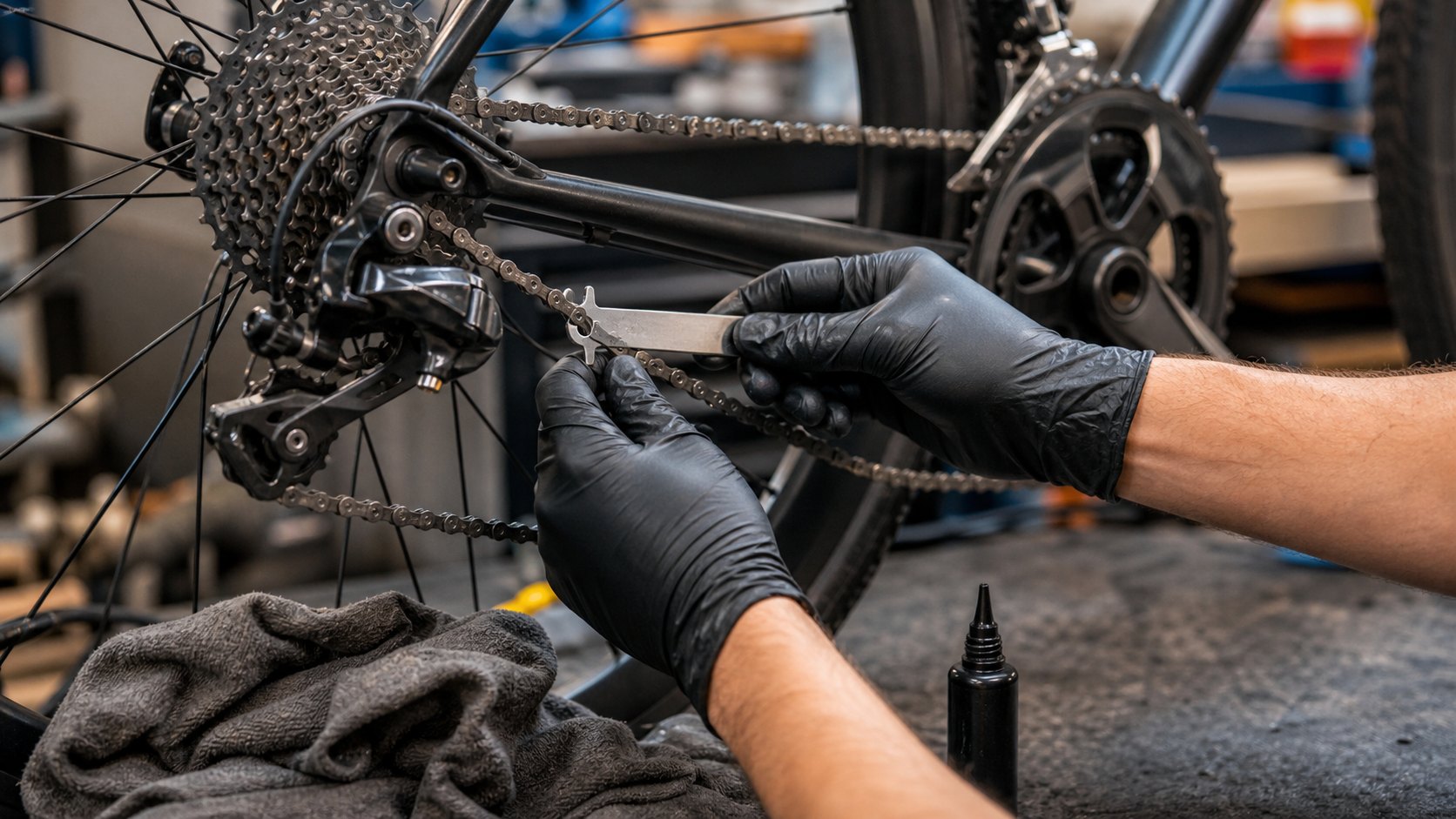
Mileage alone cannot tell you whether a chain is worn. Winter grit, mud, poor lubrication, narrow drivetrains, heavy torque, and cleaning habits all change chain life. The estimator should prompt a real chain-checker measurement before shifting gets rough or cassette wear accelerates.
| Wear clue | What it suggests | Next action |
|---|---|---|
| Gritty winter riding | Abrasive paste can shorten chain life. | Clean and measure more often. |
| Skipping under load | Chain, cassette, or derailleur may be worn or misadjusted. | Measure the chain before forcing shifts. |
| High-mileage chain | Replacement may protect more expensive parts. | Use a chain checker and compare drivetrain guidance. |
| New chain skips | Cassette may already be worn. | Inspect the cassette before blaming the chain. |
For repairs and related planning, use how to fix a bike chain, the bike maintenance cost calculator, and the brake pad wear calculator.
How to use this tool
Enter the values that match your bike, route, or riding conditions, then use the result as a starting point. Check manufacturer limits and make a short test ride before relying on any setup change for a long ride.
Related Icebike tools and guides
This tool is meant for planning and comparison. It does not replace professional fit, mechanic inspection, manufacturer instructions, or local road-safety judgment.