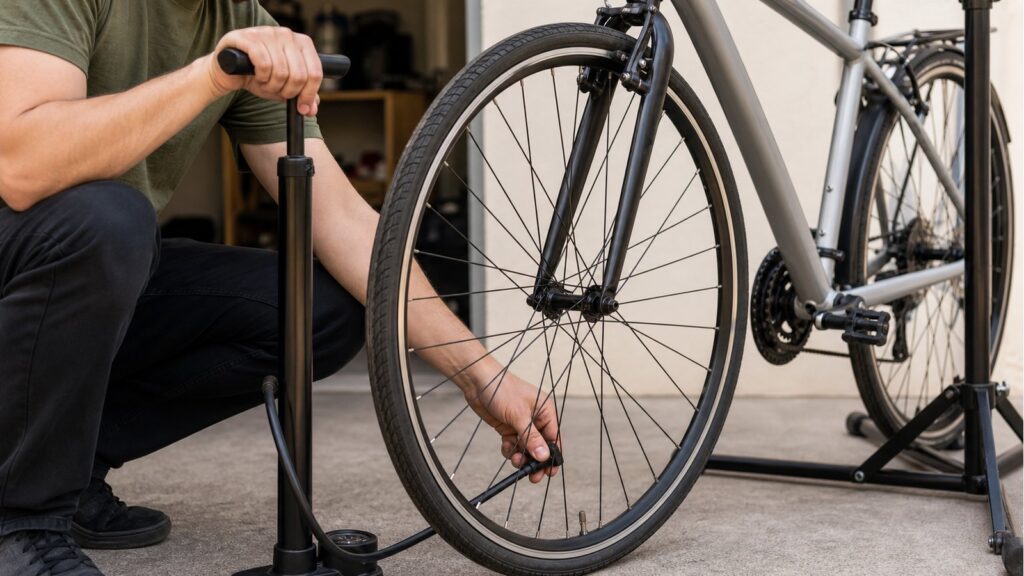
Most hybrid bike tires land between about 40 and 75 psi, but the right number depends on tire width, rider weight, tubes or tubeless setup, pavement quality, and the pressure range printed on the tire. Start in the middle of the sidewall range, then tune by comfort, cornering, and flat resistance.
Hybrid Tire Pressure By Tire Width
Hybrid bikes sit between road bikes and mountain bikes, so the pressure should not be copied from either extreme. Narrow fitness-hybrid tires need more pressure. Wider comfort, commuter, and gravel-style hybrid tires can run lower without feeling slow. The safe range still comes from the tire and rim manufacturer; Schwalbe’s pressure guidance is a useful reminder that width, load, and surface all change the right starting point.
| Hybrid tire size | Common starting range | Best use |
|---|---|---|
| 700×28-32 | 60-85 psi | Fitness hybrids, smooth pavement |
| 700×35-38 | 45-70 psi | City riding, paths, mixed pavement |
| 700×40-45 | 35-60 psi | Comfort hybrids, rough roads, light gravel |
| 26×1.75-2.0 | 35-60 psi | Older hybrids, comfort bikes, paths |
This chart is a starting point. The tire sidewall and rim limit still control the safe range.
Use Weight And Surface To Tune The Number
A lighter rider on smooth pavement can usually start near the low-middle of the tire range. A heavier rider, rear rack, child seat, or panniers should move toward the high-middle. If the rear tire visibly squats when you sit on the bike, add pressure in small steps.
Surface matters too. Rough pavement, brick paths, and hardpack trails reward slightly lower pressure because the tire can absorb bumps instead of bouncing over them. On clean pavement, slightly higher pressure can feel more responsive.
Front And Rear Pressure Do Not Have To Match
The rear tire carries more of the rider’s weight on most hybrids, especially with cargo. It is normal to run the rear tire a few psi higher than the front. For many 700×35-40 hybrid tires, a 3-5 psi rear difference is a reasonable starting point.
If the front tire feels harsh or skittish, lower it slightly. If the rear tire feels slow, vague, or prone to rim strikes, raise it slightly.
Tubes Versus Tubeless
Most hybrids still use tubes. Tubed tires need enough pressure to avoid pinch flats when the wheel hits a pothole or curb edge. Tubeless tires can often run lower, but only if the tire and rim are tubeless-ready and set up correctly.
If you are unsure, assume tubes and keep the pressure more conservative. For repeated slow leaks, check Icebike’s guide to bike tire pressure loss.
Quick Troubleshooting
If your hybrid feels slow and the tire sidewalls wrinkle while riding, add pressure. If your hands, wrists, or back feel beaten up on normal roads, lower pressure a few psi while staying inside the tire range. If flats happen after potholes, inspect the tube and rim tape, then raise pressure slightly.
Pressure also changes with time. Check weekly for commuting, before longer rides, and any time the bike has sat for more than a couple of weeks.
Internal Links For Better Setup
Use Icebike’s bike tire pressure calculator for a broader starting estimate. If you are changing tire sizes, check the bike tire size chart. If the bike itself feels wrong after the tires are set, revisit the bike size chart.
A Visual Pressure Flow For Hybrid Riders
Hybrid riders often ask for one PSI because the category feels simple. The bikes are not simple: some are narrow-tire fitness bikes, some are comfort bikes, some are commuters with racks, and some spend half their time on crushed gravel paths. Use this flow before the chart number.
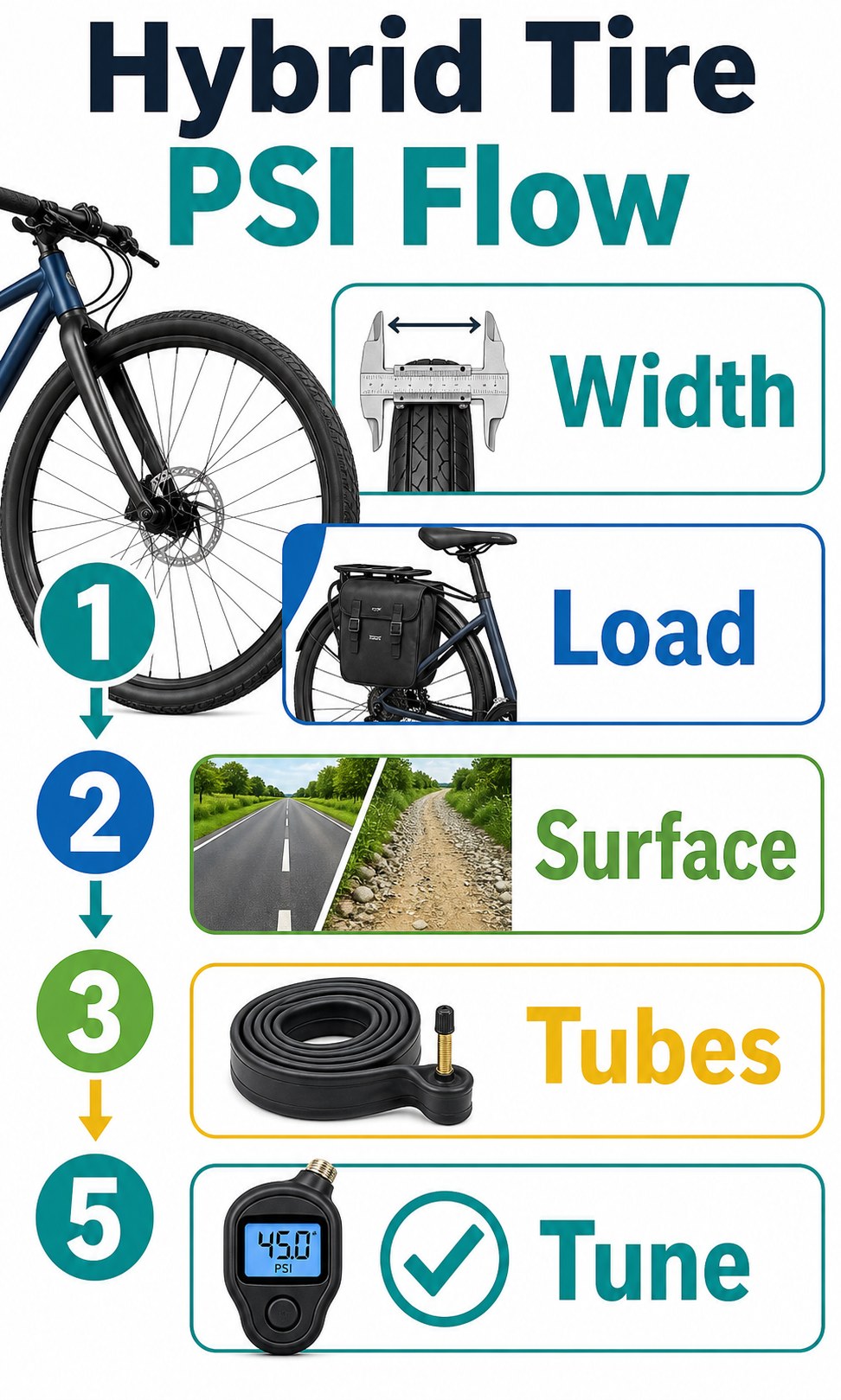
| Start here | If yes | If no |
|---|---|---|
| Is the tire 40 mm or wider? | Start lower and tune for comfort | Use the 32-38 mm range |
| Do you carry rear bags? | Add rear pressure only | Keep front/rear close |
| Are you on broken pavement? | Lower slightly within range | Keep efficient pavement pressure |
| Are you using tubes? | Stay conservative against pinch flats | Tubeless may allow a lower setup |
| Are you getting hand pain? | Lower front first | Check saddle/bar fit next |
This is the practical difference between a hybrid guide and a generic tire-pressure table. It gives the rider a way to adapt the number to the bike in front of them.
Hybrid Tire Pressure By Use Case
The best hybrid pressure depends on how the bike earns its miles. Fitness rides reward a firmer setup. Commuting needs flat protection and load support. Rough paths need comfort and traction. Do not chase the lowest number if you ride through potholes with tubes, and do not chase the highest number if the bike is supposed to smooth out bad pavement.
| Use case | Tire width | Front starting point | Rear starting point | Main adjustment |
|---|---|---|---|---|
| Fitness path ride | 32-35 mm | 60-70 psi | 62-75 psi | Lower if shoulders feel tense |
| City commute | 35-40 mm | 48-60 psi | 52-65 psi | Rear +3-5 psi with panniers |
| Mixed path and road | 38-45 mm | 40-52 psi | 42-56 psi | Lower for rough paths |
| Comfort hybrid errands | 40-50 mm | 35-48 psi | 38-52 psi | Keep enough rear support |
| Older 26-inch hybrid | 1.75-2.0 in | 40-55 psi | 42-58 psi | Inspect casing before riding |
Use the tire’s printed sidewall limits as the final authority. If this table suggests a number outside that range, the tire marking wins.
The One-Ride Tuning Test
A hybrid bike is easy to tune because most riders can feel the change quickly. Choose a short loop with the kind of surface you actually ride. Start with the chart value, ride for 10-15 minutes, and change only one thing. If you change both tires, saddle height, route, and bag load at once, you will not know which change helped.
| What you feel | Likely cause | First change |
|---|---|---|
| Bike bounces over cracks | Too much pressure, especially front | Lower front 2-3 psi |
| Rear end feels slow | Rear tire too soft for load | Add rear 3 psi |
| Tire feels vague in turns | Pressure too low or tire worn | Add pressure, inspect tread |
| Hands go numb | Front pressure, fit, or bar position | Lower front and check fit |
| Flats after curbs | Tubes too low for impacts | Add pressure and inspect rim tape |
After the loop, write down the numbers that worked. The best hybrid setup is usually not symmetrical. The rear tire carries more rider and cargo weight, while the front tire controls comfort and steering feel.
Pressure, Fit, And Comfort Problems
Pressure can fix harshness, but it cannot fix every comfort problem. If lowering the front tire helps a little but your hands still hurt, check saddle angle, bar height, grip position, and reach. If knees hurt, pressure is not the first suspect; saddle height, cadence, and gearing matter more. The bike should feel easier after adjustment, not just softer.
For fit questions, use Icebike’s bike size chart. For tire sizing before a replacement, use the bike tire size chart. Those internal tools make this article more useful than a standalone pressure table because they help the rider solve the related problem, not just the keyword.
Seasonal And Storage Checks
Hybrid tires lose air while sitting, and narrow tires usually make that loss more obvious. Schwalbe’s pressure guidance says a gauge is much more reliable than the thumb test, and that pressure should be checked and adjusted at least once a month. For commuters, weekly is more realistic.
| Situation | What to do |
|---|---|
| Bike stored two weeks | Check both tires before riding |
| First spring ride | Inspect sidewalls for cracks |
| New rack or basket | Add rear pressure and retest |
| Rainy month | Check tread cuts and brake pads too |
| Repeated flats | Inspect tire, tube, rim tape, and pressure together |
Pressure is a maintenance habit, not a one-time setup. Once the right number is known, the work is fast.
When The Pressure Is Right But The Bike Still Feels Wrong
If the tire pressure is reasonable and the hybrid still feels wrong, look beyond PSI. A saddle that is too low can make the bike feel slow and can bother knees. Bars that are too far away can overload hands. Worn tires can feel slippery at any pressure. A bent wheel or rubbing brake can make a properly inflated tire feel heavy.
| Symptom after pressure tuning | Check next |
|---|---|
| Slow even at proper pressure | Brake rub, dirty drivetrain, worn tire |
| Hand pain after lowering front tire | Reach, bar height, grip position |
| Knee pain on easy rides | Saddle height, cadence, gearing |
| Tire slips in wet corners | Tire wear, surface choice, speed |
| Repeated flats at normal pressure | Rim tape, tube install, embedded debris |
This keeps the article honest: pressure is a powerful adjustment, but it is not a cure for fit, maintenance, or worn parts.
Hybrid Pressure For Heavier Riders And Lighter Riders
Rider weight changes tire deflection. Lighter riders often do not need the high end of the tire range, especially on wider hybrid tires. Heavier riders may need the upper half of the range, especially with tubes or rear bags. The goal is not to label a rider by weight; the goal is to keep the tire supported without making the bike harsh.
Make changes by feel inside the sidewall range. If the rear tire looks flattened under normal seated weight, add pressure. If the front end chatters over small cracks, lower the front a little. If the correct-feeling pressure is outside the printed range, the answer is a different tire, not ignoring the sidewall.