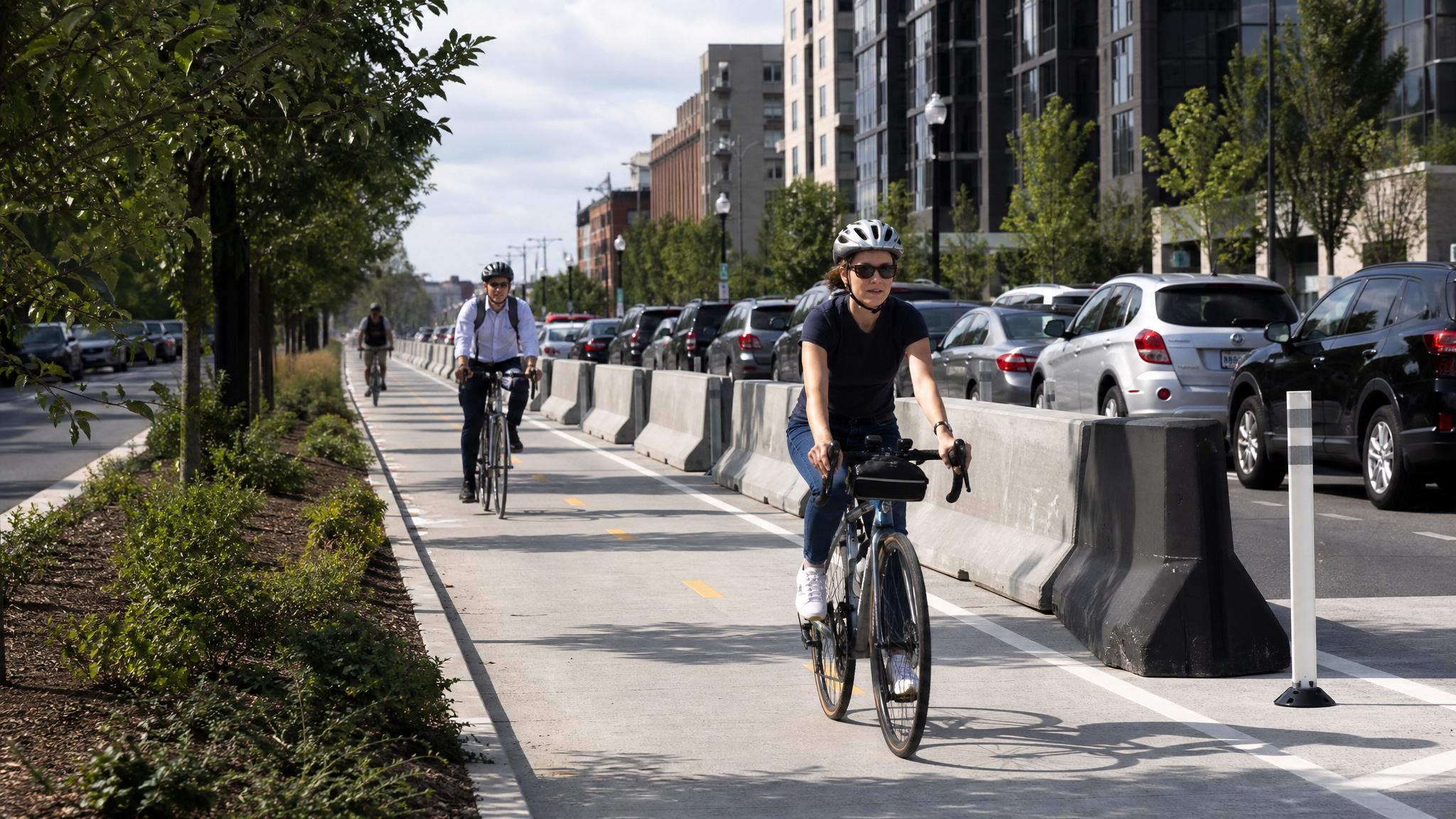


New York City will widen one of Manhattan’s busiest protected bike lanes before 2026 FIFA World Cup matches begin in June. Mayor Zohran Kwame Mamdani and NYC DOT Commissioner Mike Flynn announced on May 20, 2026 that the city will expand the Sixth Avenue protected bike lane from six feet to 10 feet between 14th Street and West 31st Street.
For riders, the important part is not the World Cup branding. It is that a crowded protected lane on a major north-south route is getting more room for passing, e-bike speed differences, and everyday commuting.
What the city is changing
The project covers Sixth Avenue in Manhattan from 14th Street to West 35th Street, with two different treatments.
Between 14th Street and West 31st Street, NYC DOT will widen the protected bike lane from six feet to 10 feet. Between West 31st Street and West 35th Street, DOT says it will keep the existing five-foot protected bike lane and add nine feet of expanded pedestrian space through a painted sidewalk extension.
NYC says the wider bike lane is meant to give riders more room to pass safely, including when faster riders and e-bike users share the corridor with slower cyclists. The city plans to finish the installation before World Cup matches begin in June.
Why Sixth Avenue matters
Sixth Avenue is not just a local bike lane. It is a major Midtown connection through one of the densest parts of New York City, linking commuters, delivery riders, Citi Bike users, tourists, and people riding to transit.
The city says Sixth Avenue remains a Vision Zero Priority Corridor. Between 2019 and 2023, NYC DOT recorded 29 traffic deaths and severe injuries along this stretch. The mayor’s office also says similar redesign projects have reduced deaths and serious injuries for all road users by 30% and for pedestrians by 31.7%.
Those numbers are the policy case for the redesign. The rider case is simpler: narrow protected lanes can still feel stressful when they are busy. A six-foot lane can work at low volume, but it leaves little room when riders are moving at different speeds or when someone needs to pass a stopped bike, scooter, or obstruction.
Why it matters for riders
Protected bike lanes are only as useful as they are comfortable to ride. A lane that technically exists but feels too narrow or crowded will push some people back into traffic, onto sidewalks, or away from biking altogether.
The Sixth Avenue project is a useful example for other cities because it treats width as part of safety. Bike networks need protection from cars, but they also need enough room inside the protected space for real-world riding. That is especially true as e-bikes, cargo bikes, delivery riders, and casual riders all use the same corridors.
The timing before the World Cup gives the project urgency, but the daily value should outlast the tournament. If the installation works as planned, commuters and visitors will get a roomier route through Midtown after the matches are over.
What is confirmed
The mayor’s office confirms the May 20 announcement, the Sixth Avenue project limits, the 6-to-10-foot widening between 14th and West 31st streets, the pedestrian-space change between West 31st and West 35th streets, and the goal to complete installation before World Cup matches begin in June.
What is not confirmed yet is the exact installation date, final on-street performance, or how construction and temporary traffic changes will feel during the work. Riders should expect street conditions to change as crews install the project.
The bottom line
For New York riders, this is a practical safety upgrade on a busy corridor. For riders elsewhere, it is another sign that protected bike lane design is moving beyond “is there a lane?” and toward “is there enough protected space for the people actually using it?”
If you ride crowded city lanes, the same lesson applies everywhere: watch for speed differences, leave passing room when you can, and treat narrow protected lanes like shared infrastructure rather than a race line. For more Icebike context, see our guides to bike commuting, the world’s notable bike lanes, and how to deal with bike lane parking.
Should you have any questions or require further clarification on the topic, please feel free to connect with our expert author Jerry O by leaving a comment below. We value your engagement and are here to assist you.