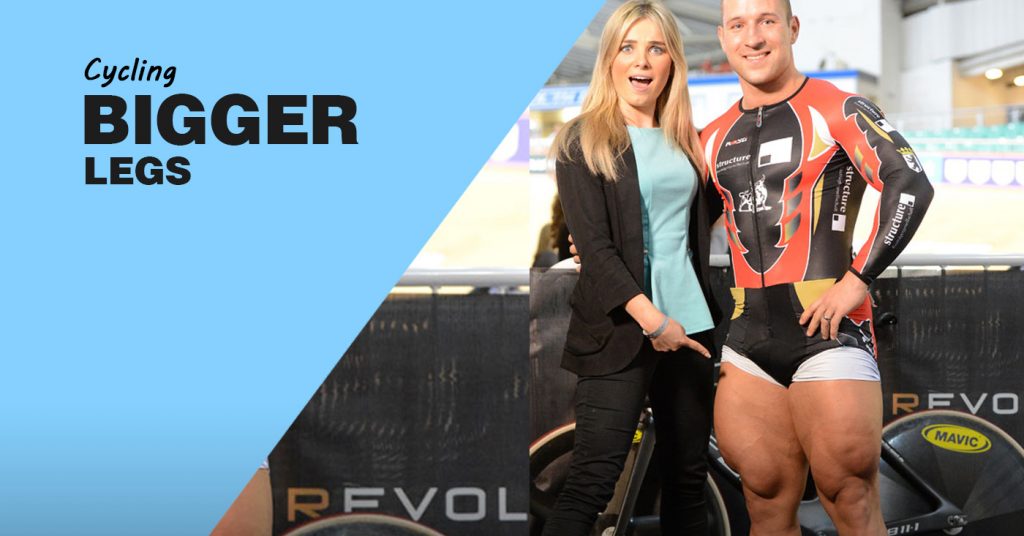
Cyclist legs look different from one event to the next. Track sprinters carry huge quads because they lift heavy weights and race efforts of a minute or less: in one MRI study, elite sprint cyclists had 52% more quadriceps muscle than elite endurance riders. Road climbers and most everyday riders end up with lean legs instead, where long hours on the bike and low body fat let the outline of the quads and calves show through.
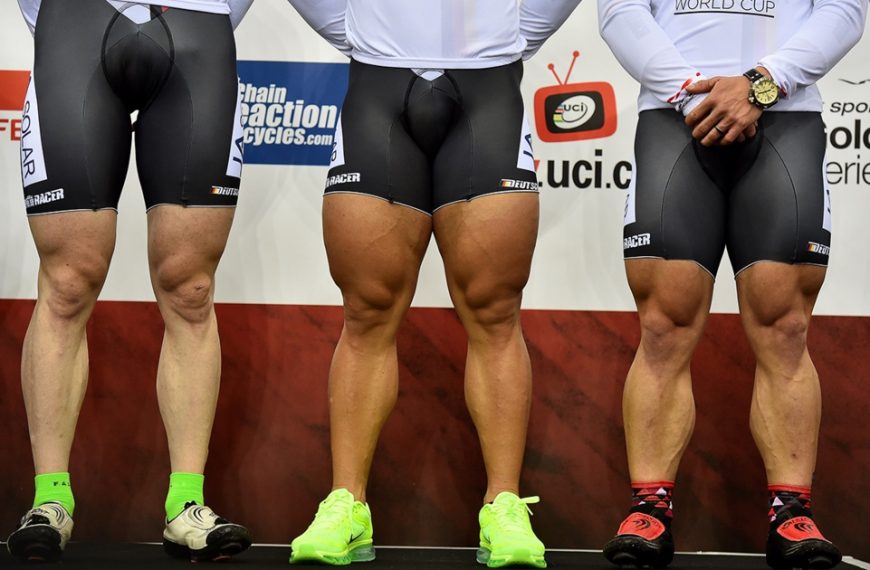
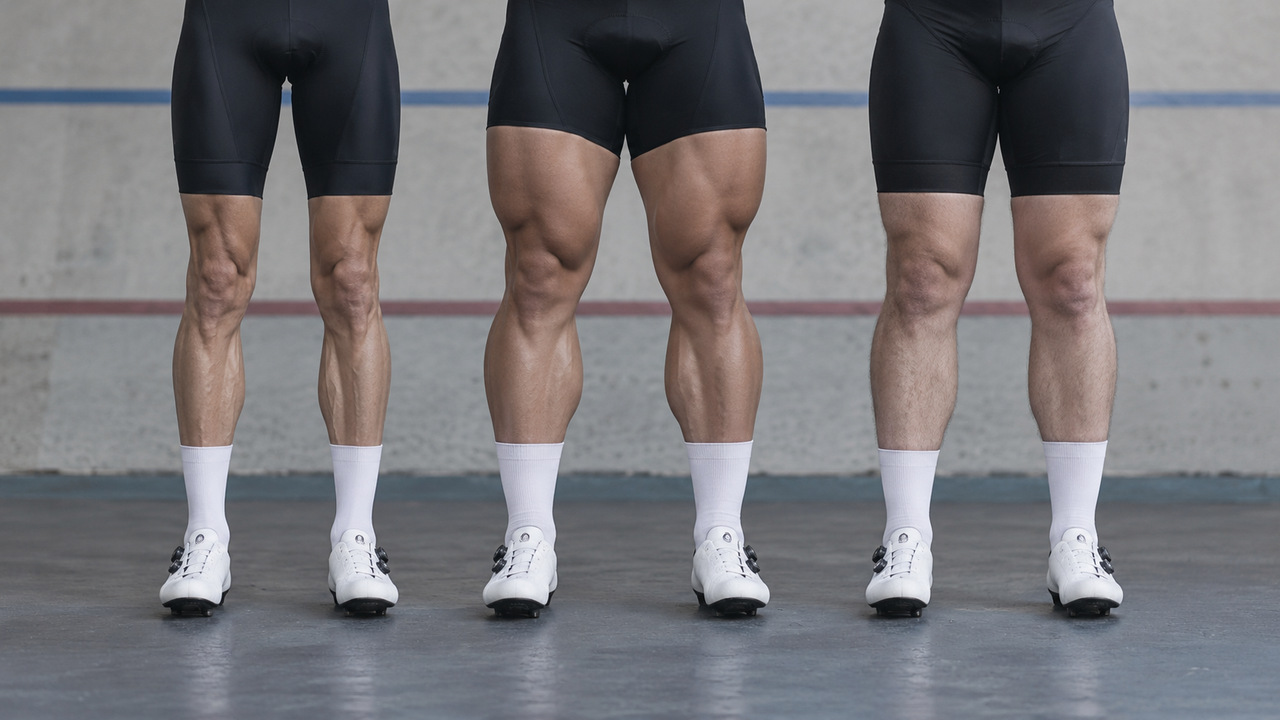
Cyclist legs by discipline
Sprint events select for muscle size, and endurance events select for low weight. Kordi and colleagues scanned the thighs of 35 elite cyclists with MRI in 2020. The 17 sprinters (track sprint and BMX) averaged 2,723 cm³ of quadriceps; the 18 endurance riders (team pursuit, road, time trial and mountain bike) averaged 1,786 cm³.
| Rider type | Race efforts | Typical leg profile | What builds it | Published numbers |
|---|---|---|---|---|
| Track sprinter, BMX racer | All-out, 60 seconds or less | Biggest quads and hamstrings in cycling; thick thighs, heavy build | Squats and Olympic lifts, short maximal sprints, a fast-twitch fiber mix | Quadriceps 2,723 cm³ vs 1,786 cm³ in endurance riders; hamstrings 994 vs 655 cm³; body mass 85.3 vs 69.1 kg (Kordi 2020) |
| Track endurance, time trialist | 4 minutes to an hour at threshold | Muscled but compact thighs; visible quads at low body fat | High-volume riding plus threshold intervals | Part of Kordi’s endurance group: 1,786 cm³ quadriceps, 69.1 kg |
| Road sprinter | Final 200-300 m after hours of racing | Bigger thighs than climbers, smaller than track sprinters | Endurance volume plus sprint work; carries more weight over climbs | No published MRI study of pro road sprinters’ legs that we could find |
| Road climber, Grand Tour rider | Long climbs, 3-week stage races | The thinnest legs in the sport; muscle outlines visible under thin skin | Years of endurance riding, slow-twitch fibers, very low body fat | Pros had less fat-free mass than amateur road riders (Martínez-Noguera 2021); fat mass fell during the 2012 Giro d’Italia (Marra 2016) |
| Everyday rider, commuter | 30-90 minutes, moderate pace | Firmer quads and calves; shape depends on body fat | Regular riding; size gains come slowly | 12 weeks of cycling raised quadriceps volume 5-6% in untrained men (Harber 2012) |
A 2022 study of 98 world-class track cyclists found the same split. Male sprinters averaged 44.1 kg of muscle against 35.3 kg for male endurance riders, with bigger limb girths (Muros 2022). Among women, sprinters had a higher BMI but no difference in muscle mass or body fat.
Which muscles shape a cyclist’s legs
Your quads do most of the work. When Ericson and colleagues measured six people pedaling at 120 W and 60 rpm, the knee extensors (quadriceps) produced 39% of the positive work, the hip extensors (glutes and hamstrings) 27% and the calves 20%. Hug and Dorel’s 2009 review of pedaling EMG describes when each muscle fires, and later studies split the pedal circle into four sectors, with 0° at the top (Hug 2013): top dead center (330-30°), downstroke (30-150°), bottom dead center (150-210°) and upstroke (210-330°).
| Muscle group | When it works hardest | Share of pedaling work | What it does to the leg’s look |
|---|---|---|---|
| Quadriceps (vastus lateralis, vastus medialis, vastus intermedius, rectus femoris) | Switches on just before the top, peaks in the downstroke (30-150°) | 39% | The bulk on the front of the thigh and the “teardrop” just above and inside the knee |
| Glutes and hamstrings as hip extensors | Top dead center through the downstroke | 27% | Firmer, rounder glutes; hamstrings help push the pedal down |
| Calves (gastrocnemius, soleus) | Downstroke into the bottom of the stroke, passing force from thigh to pedal | 20% | The defined calf of a road rider, most visible with little fat over it |
| Hamstrings as knee flexors | Bottom dead center into the upstroke | 10% | Smaller than the quads in most riders; sprinters’ hamstrings measured 52% larger than endurance riders’ (Kordi 2020) |
| Hip flexors (rectus femoris, iliopsoas, tensor fasciae latae) and shin (tibialis anterior) | Upstroke and over the top (210-30°) | 4% (hip flexors) | Little visible change; these muscles lift the leg more than they push |
Ericson’s shares come from a low workload. At race power the split shifts, so read them as a ranking rather than fixed numbers. In one Tour de France-level rider among the 14 in a 2023 study, the rectus femoris fired from 234° to 297° to lift the thigh, and the vastus lateralis switched on between 297° and 320°, ready for the next downstroke (Hering 2023).
You don’t pull up much on the pedals during normal riding. At submaximal effort the pedal torque on the upstroke is negative: the rising leg’s weight still rests on the pedal, and the other leg’s downstroke lifts it (Hug 2013). That helps explain why cyclists’ hamstrings stay smaller than their quads and the hip flexors barely change.
The glutes do more in cycling than many riders expect, because the saddle keeps your hip bent while you push. We cover that in how cycling shapes your glutes.
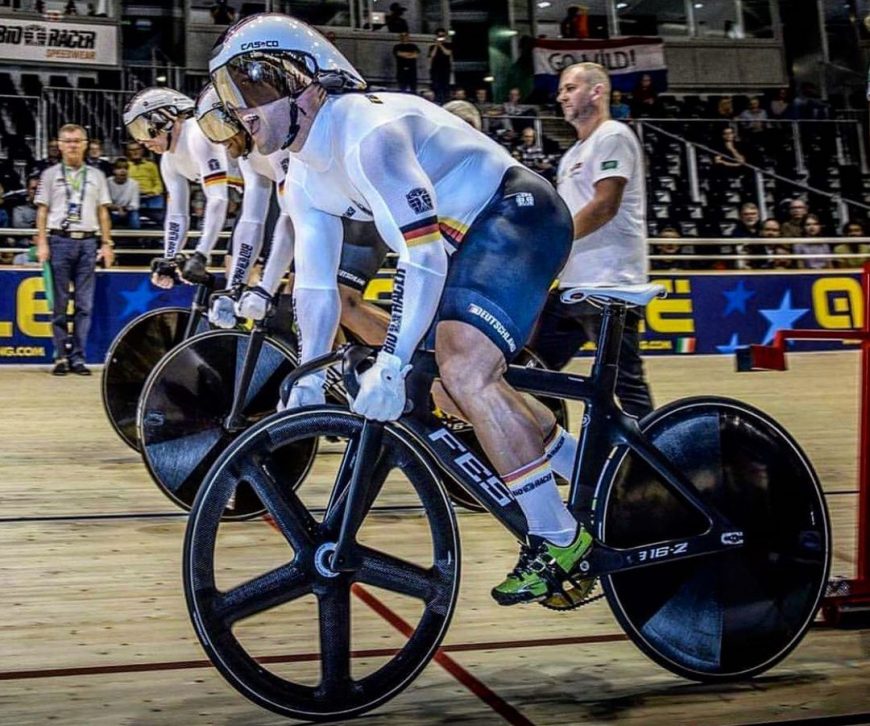
Why track sprinters have huge quads
Track sprint rewards peak power, and peak power follows quad size. In Kordi’s study, quadriceps volume alone accounted for 76% of the rider-to-rider variation in peak power. Sprinters averaged 1,521 W against 942 W for endurance riders, and their vastus lateralis fibers ran at a steeper angle (17.1° vs 14.8°), which packs more muscle into the same thigh length.
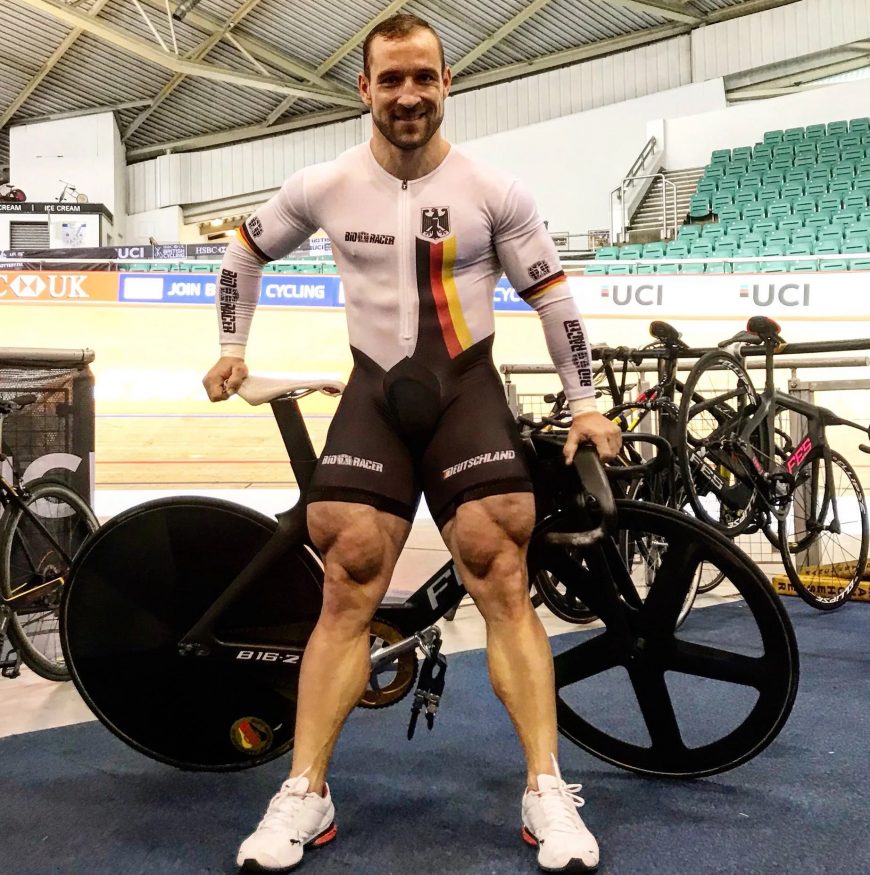
Sprinter legs come from training, genes and position:
- Heavy strength training. A 2021 review of sprint cycling lists squats and Olympic lifts among sprinters’ gym work. The same review names muscle cross-sectional area and fiber type as the two biggest drivers of maximal power, and says training gains come mostly from more maximal force and better coordination (Douglas 2021).
- Fast-twitch fibers. Training can shift fast fibers between their subtypes (IIa and IIx), but the same review says it is less clear whether slow fibers convert into fast ones. A rider who starts with more fast-twitch fiber has more to build on.
- A position that loads the hips. Sprint cyclists produced more hip-extension torque per unit of muscle than sprint runners with the hip deeply bent (120° of flexion), by recruiting more gluteus maximus (Yamaguchi 2025). The bike trains the hip in that bent range.
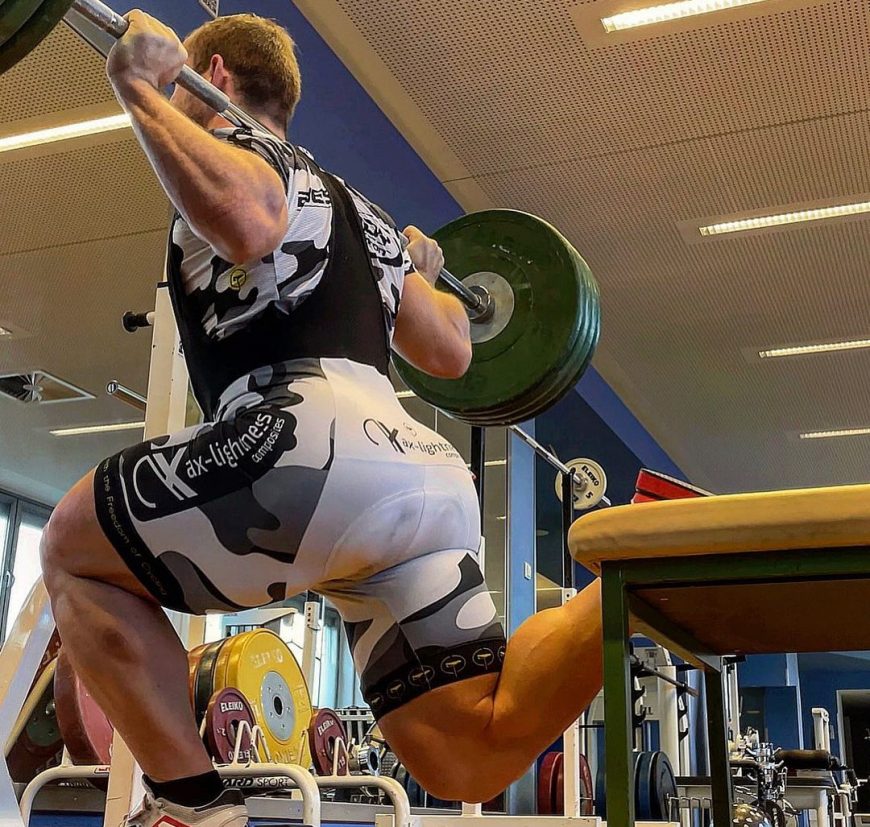
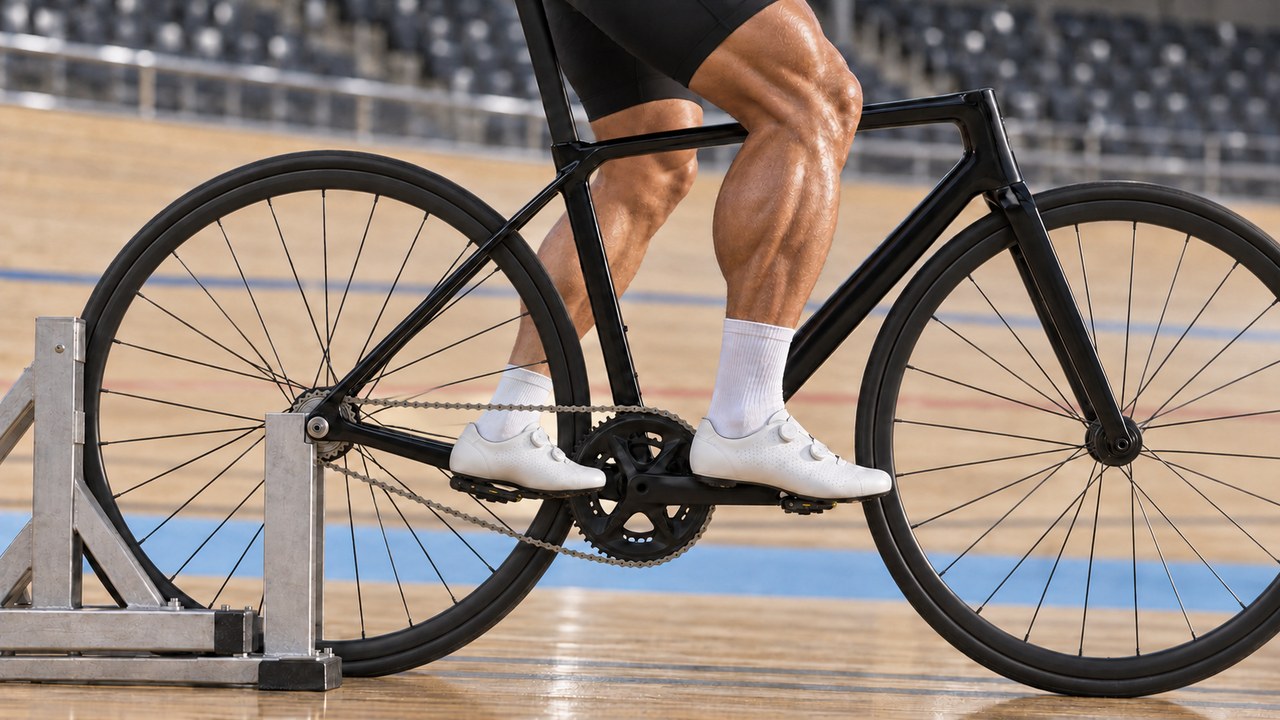
Skip the comparison if you ride for fitness. Elite sprinters train full time for years on top of favorable genetics, and riding alone won’t give you their thighs.
Why most cyclists end up with lean legs
Riding does add some muscle. Twelve weeks of stationary-bike training raised quadriceps volume 5% in young men and 6% in men in their 70s, measured by MRI (Harber 2012). A 2015 review suggested that cycling builds muscle more slowly than resistance training, and that young adults may need high-intensity intervals to gain strength (Ozaki 2015).
Three things keep most riders’ legs lean:
- Fiber type shifts toward endurance. Coyle’s 1991 study of elite riders found that years of endurance training correlated with the share of slow-twitch (Type I) fibers (r = 0.75). Those fibers resist fatigue and pack in capillaries; the elite group had 23% more capillary density than state-level riders.
- Endurance work makes a weak growth signal. A meta-analysis of 21 studies put the hypertrophy effect of endurance training at 0.27, against 1.23 for strength training (Wilson 2012).
- Climbing punishes weight. Pro road riders train and eat to stay light. A DXA study found that professional road cyclists carried less fat-free mass than amateurs while producing more power (Martínez-Noguera 2021).
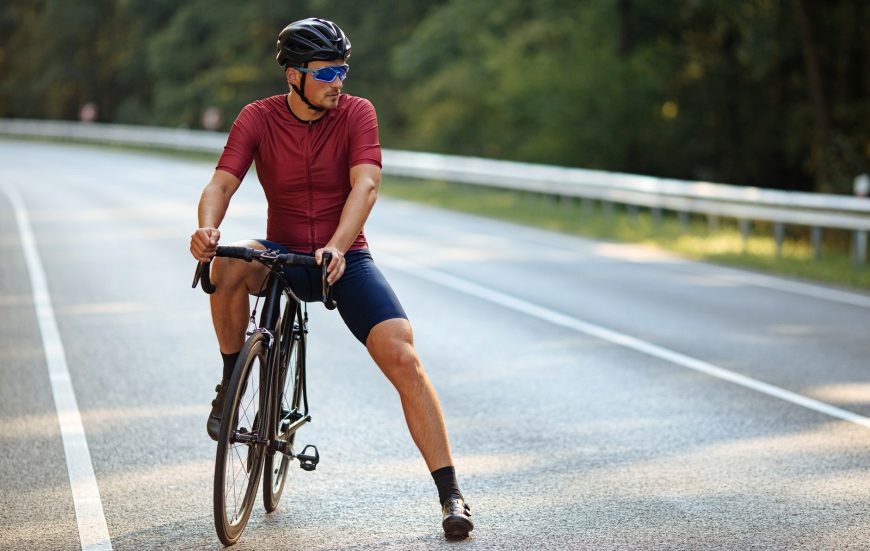
Body fat, veins and shaved legs: why pros look so defined
Low body fat explains most of the “shredded” look. Muscle shape and surface veins sit under a layer of fat, and as that layer thins, the outline of each muscle shows. At the 2012 Giro d’Italia, skinfold measurements put riders’ fat mass significantly below its starting level at mid-race and at the finish (Marra 2016).
Veins stand out for the same reason, and more during and after a hard ride, when working muscles draw extra blood. Many road racers also shave their legs, and the reasons they give are practical: easier massage, and easier cleaning and dressing of road rash after a crash.
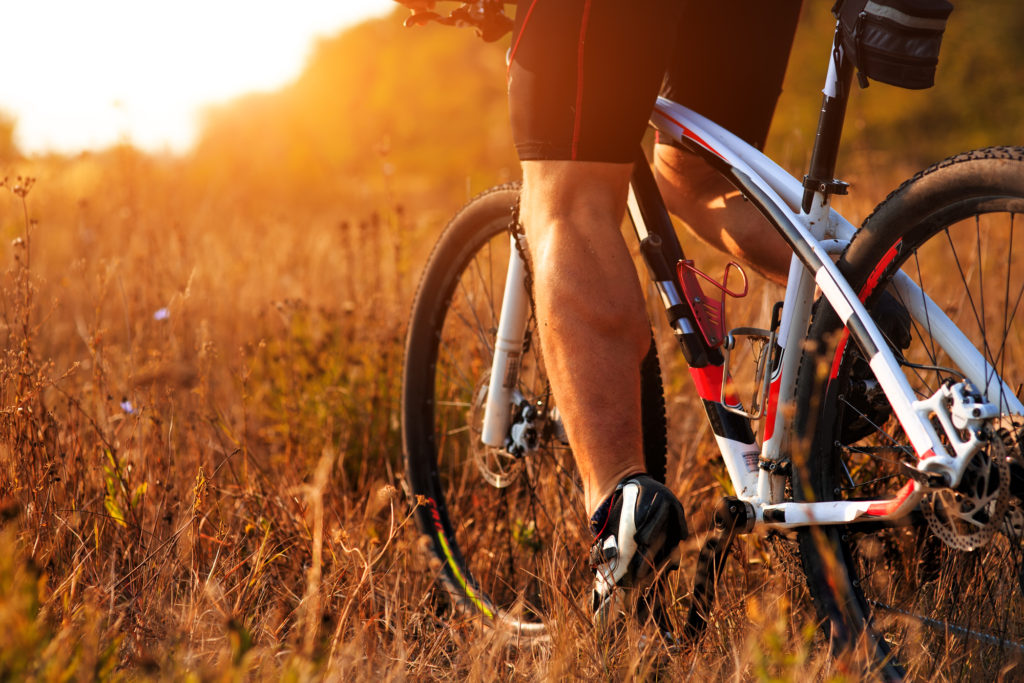
You can’t choose where you lose fat first. Our guide to burning fat with cycling covers the riding side, and the bike calories burned calculator estimates what each ride burns.
Cyclist legs vs runner legs
Cyclists tend to have thicker thighs than runners, and runners tend to have denser bones. A 2022 ultrasound study found that 16 competitive cyclists had greater thigh girths, a thicker and more pennate vastus lateralis, and more knee-extension force than 11 competitive runners (Cesanelli 2022). Pedaling loads the quads with repeated pushing (concentric contractions), while running makes the legs absorb and return force with every stride (Snieckus 2013).
The missing impact shows up in bone. In a DXA study of male recreational athletes with similar body weight and body composition, 63% of the cyclists had low bone density (osteopenia) of the spine or hip, against 19% of the runners (Rector 2008). If you only ride, add some running, jumping or heavy lifting to your week.
Men’s and women’s cyclist legs
Women build leg muscle at the same relative rate as men. A 2020 meta-analysis found no difference between the sexes in muscle growth (effect size difference 0.07) or lower-body strength gains when both followed the same lifting program (Roberts 2020). Men start with more absolute muscle, so their legs end up bigger in centimeters. Among world-class track cyclists, female sprinters and endurance riders showed no difference in muscle mass or body fat, which suggests body shape varies less between women’s disciplines (Muros 2022).
How to change the size of your legs
Heavy lifting changes leg size more than extra miles do. When well-trained cyclists added heavy strength training twice a week for 12 weeks, their thigh muscle cross-sectional area grew while body mass stayed the same (Rønnestad 2010). The full program, and how to fit it around riding, is in our guide on whether cycling builds leg muscle.
A typical gym set for bigger legs: squats, leg press, split squats and calf raises. In a meta-analysis, running done alongside lifting cut muscle and strength gains; cycling did not (Wilson 2012). Muscle also needs enough food, so long rides at a calorie deficit work against size.
If you want leaner legs, ride more hours at a steady pace and keep a small calorie deficit. Your quads won’t shrink much, since riding still loads them, but the fat over them will.
Skip heavy squats until your knees are pain-free on the bike. Pain at the front of the knee can trace to saddle height or cleat position; check our guide to cycling knee pain first.
Sources
- Kordi M, Folland J, Goodall S, et al. Mechanical and morphological determinants of peak power output in elite cyclists. Scand J Med Sci Sports. 2020;30(2):227-237. Group values from Table 3 of the accepted manuscript.
- Muros JJ, Mateo-March M, Zabala M, Sánchez-Muñoz C. Anthropometric differences between world-class professional track cyclists based on specialty (endurance vs. sprint). J Sports Med Phys Fitness. 2022;62(11):1481-1488.
- Ericson MO, Bratt A, Nisell R, et al. Power output and work in different muscle groups during ergometer cycling. Eur J Appl Physiol. 1986;55(3):229-235.
- Hug F, Dorel S. Electromyographic analysis of pedaling: a review. J Electromyogr Kinesiol. 2009;19(2):182-198.
- Hug F, Boumier F, Dorel S. Altered muscle coordination when pedaling with independent cranks. Front Physiol. 2013;4:232.
- Hering GO, Bertschinger R, Stepan J. A quadriceps femoris motor pattern for efficient cycling. PLoS One. 2023;18(3):e0282391.
- Douglas J, Ross A, Martin JC. Maximal muscular power: lessons from sprint cycling. Sports Med Open. 2021;7(1):48.
- Yamaguchi Y, Nishiyama T, Wada N, et al. Different morphology and function of hip extensor muscles between sprint runners and sprint cyclists. Sci Rep. 2025;15(1):16372.
- Harber MP, Konopka AR, Undem MK, et al. Aerobic exercise training induces skeletal muscle hypertrophy and age-dependent adaptations in myofiber function in young and older men. J Appl Physiol. 2012;113(9):1495-1504.
- Ozaki H, Loenneke JP, Thiebaud RS, Abe T. Cycle training induces muscle hypertrophy and strength gain: strategies and mechanisms. Acta Physiol Hung. 2015;102(1):1-22.
- Coyle EF, Feltner ME, Kautz SA, et al. Physiological and biomechanical factors associated with elite endurance cycling performance. Med Sci Sports Exerc. 1991;23(1):93-107.
- Wilson JM, Marin PJ, Rhea MR, et al. Concurrent training: a meta-analysis examining interference of aerobic and resistance exercises. J Strength Cond Res. 2012;26(8):2293-2307.
- Martínez-Noguera FJ, Alcaraz PE, Ortolano-Ríos R, et al. Professional cyclists have lower levels of bone markers than amateurs. Bone. 2021;153:116102.
- Marra M, Da Prat B, Montagnese C, et al. Segmental bioimpedance analysis in professional cyclists during a three week stage race. Physiol Meas. 2016;37(7):1035-1040.
- Cesanelli L, Kamandulis S, Eimantas N, Satkunskiene D. Differences in knee extensors’ muscle-tendon unit passive stiffness, architecture, and force production in competitive cyclists versus runners. J Appl Biomech. 2022;38(6):412-423.
- Snieckus A, Kamandulis S, Venckūnas T, et al. Concentrically trained cyclists are not more susceptible to eccentric exercise-induced muscle damage than are stretch-shortening exercise-trained runners. Eur J Appl Physiol. 2013;113(3):621-628.
- Rector RS, Rogers R, Ruebel M, Hinton PS. Participation in road cycling vs running is associated with lower bone mineral density in men. Metabolism. 2008;57(2):226-232.
- Roberts BM, Nuckols G, Krieger JW. Sex differences in resistance training: a systematic review and meta-analysis. J Strength Cond Res. 2020;34(5):1448-1460.
- Rønnestad BR, Hansen EA, Raastad T. Effect of heavy strength training on thigh muscle cross-sectional area, performance determinants, and performance in well-trained cyclists. Eur J Appl Physiol. 2010;108(5):965-975.