
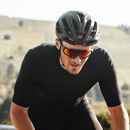

Jonas Vingegaard took the first yellow jersey of the 2026 Tour de France on Saturday, July 4, after Team Visma | Lease a Bike won the opening team time trial in Barcelona. The official Tour de France stage film gives Visma a winning time of 21:47 on the 19.6 km course, with Filippo Ganna second at eight seconds and Tadej Pogacar third at twelve seconds.
For Icebike readers, the result matters because the Tour did not start with a ceremonial sprint stage. It opened with a short, hard team time trial that gave the main general-classification riders real time gaps before the race had even left Barcelona.
What happened in Stage 1
The Tour opened with a 19.6 km team time trial from Barcelona to Barcelona, finishing at the Olympic Stadium area on Montjuic. The official stage page lists the stage as a team time trial with 200 meters of climbing.
The format mattered as much as the route. The Tour says the stage standings used each team’s best rider, while the general classification credited riders with their own individual time. That made the final climb more tactical than a normal team time trial. Teams still had to protect their leader through the flat opening section, but the strongest rider could finish the job alone if the climb demanded it.
Visma used that setup better than anyone. The Tour’s stage film says Vingegaard flew away on the final climb and stopped the clock at 21:47. Netcompany Ineos had looked dangerous, but its ride was disrupted when Kevin Vauquelin needed a bike change after a puncture. Ganna still finished second, eight seconds down.
Pogacar and UAE Team Emirates-XRG closed the day twelve seconds behind Vingegaard. The Tour says Pogacar was fastest over the last 3.7 km and took the polka-dot jersey for that effort.
Why the new format changed the race
A team time trial can hide weak riders when the clock stops on a set finisher. This opener gave the Tour a different shape. The race still rewarded a strong collective ride, but it also let team leaders attack the final uphill section for their own time.
That is why the gaps deserve attention. Twelve seconds in July can disappear in one mountain acceleration, but losing time before the first road stage changes the pressure on teams. Vingegaard starts with the jersey. Pogacar starts close enough to race aggressively. Evenepoel and the other general-classification riders already have a time target rather than a blank slate.
For everyday riders, the useful lesson is simpler: pacing and team support still matter when a route ends uphill. Visma did not win only because Vingegaard was strong at the finish. The team delivered him to the climb with enough speed and enough energy left to use that strength.
What comes next
Stage 2 stays in Catalonia, from Tarragona to Barcelona, and the official Tour page lists it as a 168.5 km hilly stage. That means the yellow jersey could face pressure again right away, especially if the finish invites attacks rather than a simple bunch sprint.
The Tour is still in its first weekend, so the result should not be treated as a final verdict on the race. It does give the 2026 edition a clear opening line: Vingegaard and Visma landed the first hit, and Pogacar is already chasing seconds.
Icebike readers following the equipment and pacing side of the race can compare this with our road bike coverage, practical guide to average bike speed, bike computer advice, and broader cycling benefits coverage.
Should you have any questions or require further clarification on the topic, please feel free to connect with our expert author Jerry O by leaving a comment below. We value your engagement and are here to assist you.