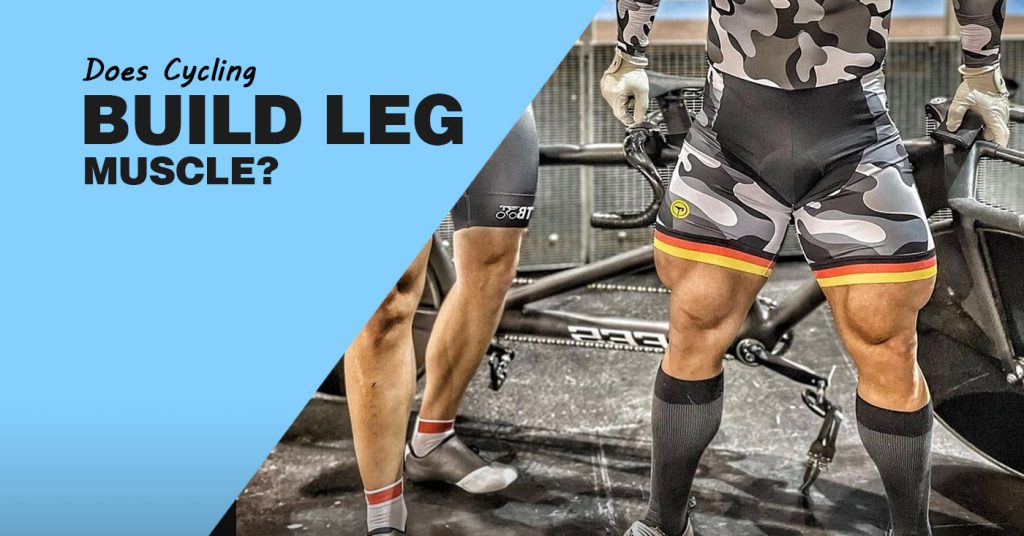
Yes, cycling builds leg muscle, and the amount depends on where you start. In small lab studies, inactive adults in their 70s grew their quadriceps 6-12% after 12 weeks on a stationary bike, riding three or four times a week. Young adults gained about 5% on a similar program, and trained cyclists who only ride gain close to nothing until they add heavy lifting.
Most of the growth lands in the front of the thigh. Calves did not grow in the one study that scanned them, no cycling study has measured upper-body growth, and riding does little for bone density. If you want bigger or stronger legs, ride hard some days and lift twice a week.
How much muscle does cycling build?
Expect a 5-12% increase in quadriceps volume over 12 weeks if you start out inactive, and less the fitter you are. Hypertrophy from cycling runs slower than from weight training: a 2015 review by Ozaki and colleagues suggested that riders likely need a longer period to grow the same amount of muscle a lifting program builds. Growth still happens: Konopka and Harber’s 2014 review challenged the common view that aerobic training has minimal effect on muscle size.
A 2012 meta-analysis of 21 concurrent-training studies (Wilson et al.) puts the gap in numbers. Endurance training alone produced an average effect size for muscle growth of 0.27. Strength training alone produced 1.23, more than four times larger. Those figures pool running and cycling studies, so they describe endurance work in general.
Most of the cycling data come from small MRI studies of 6-7 people with no control group. Read the table below as a rough range for people like you.
Who gains how much
| Your starting point | What riding alone did | Study | What moves the needle |
|---|---|---|---|
| Inactive woman, about 70 | Quadriceps volume +12% (MRI) and knee extensor power +55% after 12 weeks | Harber 2009: 7 women, 12 weeks on a cycle ergometer, MRI, no control group | Steady, moderately hard riding is enough at first |
| Inactive man, about 74 | Quadriceps +6%; a later analysis of the same six men found the vastii +7%, sartorius +6%, all 7 lower-leg muscles unchanged | Harber 2012 and Naruse 2023 (same 6 men: 3-4 rides a week, 60-180 min a week at 60-80% heart rate reserve), 12 weeks, MRI, no control group | Same as above; add calf work if you want bigger calves |
| Inactive man, about 20 | Quadriceps +5% after 12 weeks | Harber 2012: 7 young men, MRI, no control group | Harder intervals; Ozaki’s review says young adults may need higher-intensity intermittent riding to gain strength |
| Young man riding easy | About 0.6% change in thigh muscle after 8 weeks: no real gain | Abe 2010, randomized: 45 min at 40% of VO2max, 3 rides a week | Easy spinning does not grow young muscle. Ride harder |
| Trained cyclist | No change in thigh cross-sectional area over a 12-week block of normal endurance training | Rønnestad 2010: 6 riders who only rode vs 6 who also lifted | Heavy leg lifting twice a week grew thigh muscle and improved 40-min power more than riding alone over 25 weeks |
| E-bike rider | No study found on muscle size | Bourne 2018 review: e-bike riding reaches at least moderate intensity, below a regular bike | Our inference: lower assist on climbs and efforts gives your legs more work |
| Lifter adding rides | Cycling did not cut lifting gains; running did | Wilson 2012 meta-analysis, 21 studies | Keep lifting; use the bike for fitness and fat loss |
Age matters less than you might expect. In Harber’s 2012 study, young and older men gained about the same (5% and 6%), and the Ozaki review reached the same conclusion across studies. Training status matters more: once a ride stops being a new stress, it stops growing muscle. Our rule of thumb, not a study cutoff: if you already ride three or more hours a week, read the “trained cyclist” row.
Which leg muscles does cycling work?
Pedaling works the quadriceps, glutes, hamstrings and calves, with the quadriceps doing the most visible growing. Electromyography (EMG) studies of pedaling, reviewed by Hug and Dorel in 2009, track these hip, thigh and calf muscles through every pedal stroke.

Muscles that fire on every stroke do not all grow. Naruse and colleagues measured 17 leg muscles on the MRI scans of the same six older men from Harber’s 2012 study, before and after their 12 weeks of progressive cycling. The vastii (the three big quadriceps heads under the rectus femoris) grew 7% and the sartorius 6%. The adductor longus trended down 6%. All seven lower-leg muscles, calves included, stayed within 2-3% of where they started.
Cycling also shifts what kind of fiber grows. In Harber’s 2009 study of older women, slow-twitch (type I) fibers grew 16% while fast-twitch (type IIa) fibers did not change. Our guide to why cyclist legs look the way they do covers how leg shape differs by discipline and which muscle works in each part of the pedal stroke.
Do cyclists have bigger thigh muscles?
Professional cyclists do carry more leg muscle than non-athletes, according to the Ozaki review. Track sprinters show it most: their racing lasts seconds, and their programs add heavy gym work to short maximal efforts on the bike. Heavy lifting is what grows thigh muscle in riders: the Rønnestad trials below found it increased thigh cross-sectional area in trained cyclists, while riding alone did not. Selection likely plays a part too: riders born with big, powerful legs win more sprints and stay in the event.
How to make cycling build more muscle
Push more force per pedal stroke. Muscle grows in response to high tension, and on a bike you raise tension with a bigger gear, a steeper hill or an all-out sprint. Long easy rides raise endurance and burn calories, but the Abe study above found no real change in muscle size in young riders who rode easy for 45 minutes.
Sprints
Short sprints of 10-15 seconds put the highest force through your legs that a bike allows. A 2021 review by Callahan, Hawley and colleagues looked at high-intensity intervals (efforts at or above the power you hold at VO2max; sprints sit beyond that). It noted that these intervals place high tensile stress on muscle, somewhat like resistance exercise, and made the case for using them with middle-aged and older adults who are prone to muscle loss. Do 6-10 sprints with 3-4 minutes of easy spinning between them, so each one starts fresh.
Hill repeats and big-gear efforts
Climbing forces you to produce more power at a lower speed. Pick a hill that takes 1-3 minutes and ride it 4-6 times, seated for the first half and standing for the second. Indoors, shift into a big gear and hold 50-60 rpm for 3-4 minutes at a time. Our gear shifting guide explains which chainring and cog combinations give you that resistance.
Evidence that low cadence grows more muscle than the same power at a normal cadence is thin. It does raise the force on each stroke, and force is the variable lifters manipulate. Skip low-cadence work if it gives you knee pain; ride at 70 rpm or above and use sprints for force instead.

E-bikes
An e-bike gives you less leg stimulus at the same speed, because the motor supplies part of the power. The Bourne review found e-bike riding still reaches moderate intensity, enough for heart and fitness gains in inactive people. To use an e-bike for leg strength, drop to the lowest assist level or switch it off for climbs and efforts, then turn it back up to get home.
Blood flow restriction
In the Abe study, young men who rode 15 minutes at an easy 40% of VO2max with pressure cuffs on their thighs grew thigh muscle 3.4-5.1% in 8 weeks. Researchers set and monitored the cuff pressure in a lab. Leave this one to supervised settings.
A 4-week muscle-biased cycling plan
Treat this plan as a template built from the principles above. Nobody has tested it as a program. It assumes you can already ride for an hour and have two days a week for strength work. Set effort with your FTP or heart rate: the FTP zones calculator converts a 20-minute test into power zones, and the heart rate zone calculator works without a power meter.
| Week | Session A: big-gear efforts | Session B: sprints or hills | Session C: easy ride | Strength (2 days) |
|---|---|---|---|---|
| 1 | 4 x 3 min at 50-60 rpm, 76-90% of FTP (effort 6-7 out of 10), 3 min easy between | 6 x 10 s seated sprints from a rolling start, 4 min easy between | 45-60 min, conversational pace | 3 sets of 8-10 reps: squat or leg press, Romanian deadlift, calf raise |
| 2 | 5 x 3 min, same cadence and effort | 8 x 10 s sprints, or 4 x 1-2 min hill repeats | 60 min easy | Add weight; stop each set 1-3 reps short of failure |
| 3 | 5 x 4 min, same cadence and effort | 8 x 15 s sprints, or 6 x 1-2 min hill repeats | 60-75 min easy | Add a fourth set to squats; add split squats |
| 4 (lighter) | 3 x 3 min | 4 x 10 s sprints | 45 min easy | 2 sets per exercise at week 3 weights |
Warm up for 10-15 minutes before sessions A and B. Put the hard bike sessions and leg strength days on separate days where you can; if they share a day, a common coaching rule of thumb is to lift first or leave at least six hours between them. After week 4, repeat the cycle with harder targets. Use an easy spin on rest days if your legs feel heavy, as explained in our guide to recovery rides.
Skip sessions A and B if you are returning from a knee injury or have uncontrolled blood pressure; check with your doctor first and start with session C only.
What cycling does not do
Build your upper body
Your arms, chest and back hold you on the bike, but they do not move against a load. No cycling study we found measured upper-body growth. Plan two upper-body sessions a week (a push, a pull and a row) if you want them to grow.
Train your core separately
Your trunk muscles hold your pelvis and torso steady while your legs push, so they work on every ride. None of the studies in this article measured trunk or ab muscle size, and we found no cycling study that did. If a stronger core is the goal, add planks, side planks and loaded carries twice a week.
Grow your calves much
Calf muscles fire on every stroke, yet none of the seven lower-leg muscles grew in the Naruse study. Add standing calf raises, 3 sets of 10-15, if calf size matters to you.
Load your bones
Riding is low impact, which spares your joints and also gives your skeleton little reason to get denser. A 2012 systematic review of 31 studies (Olmedillas et al.) found that adult road cyclists in regular training have low bone mineral density at key sites such as the lumbar spine. Mountain biking or pairing cycling with other sports appeared to reduce that effect. Lifting, jumping and running fill the gap.
How to combine cycling with strength training
Lift two or three times a week and ride on the other days, or ride after you lift. Cycling interferes with lifting gains less than running does: in the Wilson meta-analysis, running alongside a lifting program cut both muscle growth and strength gains, while cycling did not. Riding volume still matters. A separate Rønnestad study (2012) found that well-trained cyclists doing high-volume endurance work gained less muscle from the same lifting program than people who only lifted.
For riders who race, the 2010 Rønnestad study shows a workable split: heavy leg strength training twice a week for 12 weeks before the season, then once a week during it. That group kept its gains in thigh muscle and strength and improved its 40-minute power more than the group that only rode.
Eat enough protein to support the work. A meta-analysis of 49 resistance-training trials (Morton et al., 2018) found that muscle gains stopped improving above a total intake of about 1.6 g of protein per kg of body weight per day. For a 75 kg (165 lb) rider, that is about 120 g a day. The study covered lifting programs, so treat the figure as a guide for the strength side of your week.
If your goal is X, do Y
| Your goal | Do this | Skip this |
|---|---|---|
| Keep leg muscle as you age | Ride 3-4 times a week, 60-180 min a week in total at a hard-but-steady effort (60-80% of heart rate reserve); add 2 strength days a week as the U.S. activity guidelines advise | Easy rides alone if you are already fit |
| Bigger quads and glutes | Lift legs 2-3 times a week; use sprints and hill repeats on the bike | Long, steady rides as your main leg work |
| Faster and stronger on the bike | Heavy leg lifting twice a week in the off-season, once a week in season (Rønnestad 2010) | Dropping lifting once racing starts |
| Lose fat and keep muscle | Ride for the calorie burn, lift twice a week, hit your protein target | Big calorie cuts with no lifting |
| Stronger bones | Add lifting, jumping or running; ride trails as well as roads | Relying on road cycling alone |
| Bigger calves | Standing calf raises, 3 sets of 10-15, twice a week | Expecting riding to do it |
| A stronger upper body | Presses, rows and pull-ups twice a week | Expecting riding to do it |
To see how many calories your rides burn while you balance fat loss and muscle, use the bike calories burned calculator.
Does cycling build muscle: quick answers
Does cycling build muscle or just tone?
“Toning” means building some muscle while losing fat, and cycling can do both. Inactive adults grew their quadriceps 5-12% in 12 weeks in the studies above. Trained riders need sprints and lifting to keep growing.
Is a stationary bike as good as riding outside?
No study has compared the two for muscle growth. The growth studies on inactive adults above used stationary cycle ergometers, so indoor riding is the tested option. Muscle responds to the force you produce, and outside you can produce the same high force on hills and in sprints.
How long before cycling builds visible muscle?
The studies measured gains at 8-12 weeks with MRI. Our inference: a 5-12% change in quadriceps volume is easier to see on a scan than in the mirror, and fat loss from riding may change how your legs look first.
Do you need protein after cycling to build muscle?
Total daily protein matters more than timing. Aim for about 1.6 g per kg of body weight per day if you are lifting as well as riding.
Sources
- Ozaki H, Loenneke JP, Thiebaud RS, Abe T. Cycle training induces muscle hypertrophy and strength gain: strategies and mechanisms. Acta Physiologica Hungarica, 2015 (review).
- Harber MP et al. Aerobic exercise training improves whole muscle and single myofiber size and function in older women. American Journal of Physiology, 2009.
- Harber MP et al. Aerobic exercise training induces skeletal muscle hypertrophy and age-dependent adaptations in myofiber function in young and older men. Journal of Applied Physiology, 2012.
- Naruse M et al. Cycle exercise training and muscle mass: a preliminary investigation of 17 lower limb muscles in older men. Physiological Reports, 2023.
- Konopka AR, Harber MP. Skeletal muscle hypertrophy after aerobic exercise training. Exercise and Sport Sciences Reviews, 2014 (review).
- Abe T et al. Effects of low-intensity cycle training with restricted leg blood flow on thigh muscle volume and VO2max in young men. Journal of Sports Science and Medicine, 2010.
- Wilson JM et al. Concurrent training: a meta-analysis examining interference of aerobic and resistance exercises. Journal of Strength and Conditioning Research, 2012.
- Rønnestad BR, Hansen EA, Raastad T. In-season strength maintenance training increases well-trained cyclists’ performance. European Journal of Applied Physiology, 2010.
- Rønnestad BR, Hansen EA, Raastad T. High volume of endurance training impairs adaptations to 12 weeks of strength training in well-trained endurance athletes. European Journal of Applied Physiology, 2012.
- Hug F, Dorel S. Electromyographic analysis of pedaling: a review. Journal of Electromyography and Kinesiology, 2009.
- Callahan MJ, Parr EB, Hawley JA, Camera DM. Can high-intensity interval training promote skeletal muscle anabolism? Sports Medicine, 2021 (review).
- Bourne JE et al. Health benefits of electrically-assisted cycling: a systematic review. International Journal of Behavioral Nutrition and Physical Activity, 2018.
- Olmedillas H et al. Cycling and bone health: a systematic review. BMC Medicine, 2012.
- Morton RW et al. A systematic review, meta-analysis and meta-regression of the effect of protein supplementation on resistance training-induced gains in muscle mass and strength in healthy adults. British Journal of Sports Medicine, 2018.
- U.S. Department of Health and Human Services. Physical Activity Guidelines for Americans, 2nd edition: top 10 things to know.