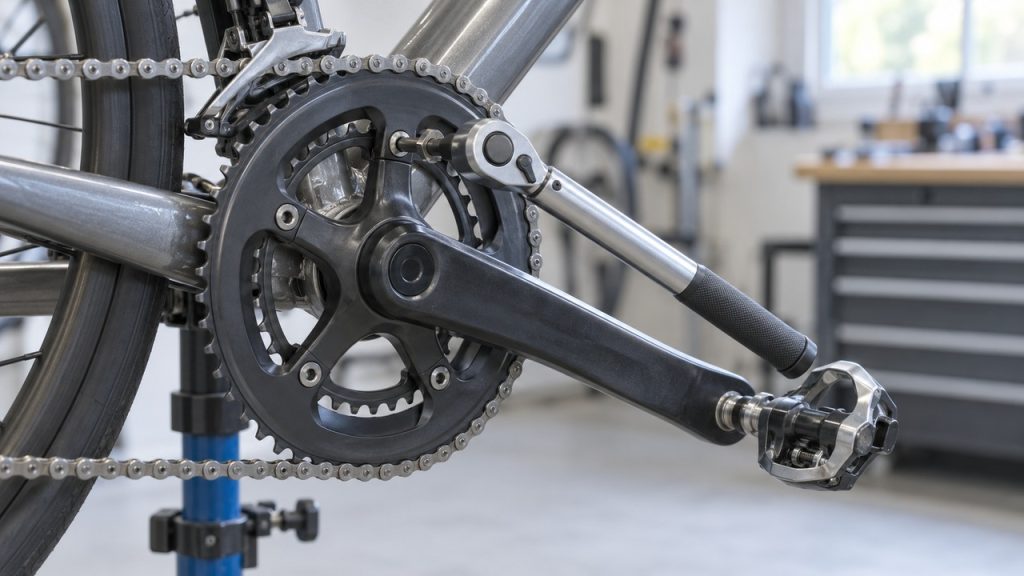
A click or creak once every pedal stroke usually lives in the crank area: the pedals, your cleats, a crank arm, the chainring bolts or the bottom bracket. A click once per wheel turn is in the wheel, and a steady tick while coasting is the rear hub’s pawls, which is normal. Count the rhythm, then test sitting, standing and coasting to narrow the noise to one part.
Park Tool’s timing rule: once per crank revolution is probably the crankset and pedal area, once every 2-3 revolutions may be the chain, and a noise while you are not pedaling is somewhere else. Most fixes are the same: clean and grease the joint, then tighten it to the right torque.
Find the noise by when it happens
Ride a short, quiet loop, note the timing and match it to a row.
| When it clicks or creaks | Rhythm test | Most likely sources | Check first |
|---|---|---|---|
| Every pedal stroke | Once per crank turn, locked to your cadence | Pedals, cleats, crank arms, chainring bolts, bottom bracket; if seated only, saddle or seatpost; under hard load, rear quick release or thru-axle | Pedal tightness, then crank arm play |
| At the bottom of the stroke on one side | Once per crank turn, always the same foot | That side’s pedal or cleat | Re-grease and tighten that pedal; check the cleat bolts |
| Every two or three pedal strokes | A beat that drifts against your cadence | Chain: a dry or stiff link | Backpedal and watch the chain pass the derailleur pulleys |
| Once per wheel turn, pedaling or not | Speeds up with road speed, ignores cadence | Tire (thorn, bulge), loose spoke, brake rotor or pad touching in one spot, computer magnet, tube valve rattling in the rim, quick release | Lift and spin the wheel slowly and watch |
| Only under load: standing, sprinting, climbing | Loud on hard strokes, quiet when you spin easy | Bottom bracket, crank arms, pedals, chainring bolts, wheel axle, headset, stem and bar | Seated vs standing test, then the headset brake-rock test |
| Only seated, often over bumps | Stops the moment you stand | Saddle rails, saddle clamp, seatpost in the frame | Clean and grease the seatpost and rail clamp |
| Only when coasting | Fast, even ticking from the rear hub | Freehub or freewheel pawls (normal) | Nothing, unless it grinds, clunks or slips |
| Only in some gears | Starts or stops when you shift | Rear indexing, front derailleur cage rub, a worn or loose cog | Shift one click at a time and listen at each gear |
| When you turn the handlebars | Creak at the bar movement, not the pedals | Cable housing end caps where they enter the frame, headset | Turn the bars side to side with the bike standing still |
| Knock when braking hard or rocking the bike | Felt through the bars | Loose headset, brake caliper play, suspension fork play | Front brake on, rock the bike forward and back |
| Rattle on rough roads only | Random, follows the bumps | Bottle cage bolts, rack bolts, chain slapping the frame, loose accessories | Tap each bolt-on part by hand with the bike still |
Our quick rule: shift one or two cogs and hold the same road speed. A click that stays locked to your feet is on the crank side or in the chain. A click whose rate follows road speed, whatever gear you pick, is in a wheel.
Where the noise comes from: parts, checks and fixes
Enduro Bearings, a bearing maker, warns that noises “telegraphing through the frame” often sound like the bottom bracket when they are not. Each part name jumps to its fix.
| Where | Typical noise | Quick check |
|---|---|---|
| Pedals | Tick at the bottom of the stroke, every turn | Spin each pedal on its axle; feel for roughness or play |
| Cleats and shoes | Click or creak under hard strokes, clipless shoes only | Ride the same loop in other shoes or on flat pedals |
| Crank arms | Creak or click every stroke, worse under load | Grab both crank arms and push them side to side |
| Chainring bolts | Click every stroke, often under load | Try each bolt with a hex key |
| Bottom bracket | Creak or click under load, every stroke | Crank side-play test; listen with cranks off and spindle turned by hand |
| Saddle and rails | Creak when seated, over bumps | Stand on the pedals: does it stop? |
| Seatpost | Creak when seated, every stroke | Same stand-up test |
| Handlebar and stem | Creak when you pull on the bars, standing or sprinting | Ride seated with a light grip: does it fade? |
| Headset | Knock when braking, standing or sprinting | Front brake on, rock the bike |
| Quick release or thru-axle | Creak or click under pedaling load, sometimes once per wheel turn | Open and re-close it, then ride the same loop |
| Spokes | Ping or click once per wheel turn, or a creak under load | Squeeze pairs of spokes all around the wheel and compare |
| Freehub | Ticking while coasting; clunk or slip while pedaling | Wheel up: turn the cassette forward; it must drive the wheel |
| Derailleur and chain | Tick in some gears; click every 2-3 crank turns | Shift through the gears; backpedal and watch the pulleys |
| Frame | Creak under load that survives every fix above | Clean it and inspect welds, dropouts and the bottom bracket area |
How to isolate the noise, step by step
Change one thing at a time and ride the same loop after each change, so you know which fix worked.
- Count the rhythm. Once per crank turn, every 2-3 crank turns, or once per wheel turn: crank area, chain or wheel.
- Coast. Stop pedaling at speed. If the noise keeps going, it is probably not in the pedals, cranks or bottom bracket. If it is a fast, even tick from the rear hub, it is the freehub doing its job.
- Sit, then stand. Pedal hard seated with a light grip, then standing. Seated only points to the saddle or seatpost, because standing takes your weight off them. Standing only points to the cranks, pedals, bottom bracket, bars, stem or headset.
- Shift gears. Use the cadence-or-speed rule above. If the noise starts or stops at one gear, look at shifting and the cogs before the bearings.
- Swap what touches your feet. Ride the loop in different shoes, or fit a known-quiet pair of pedals. Do not swap your own pedals left to right: the left pedal has a left-hand thread. Quiet in other shoes means cleats; quiet with other pedals means pedals.
- Test the wheels. Re-seat each wheel fully in the dropouts and re-close the quick release or re-tighten the thru-axle. A borrowed wheel is a quick swap test.
- Check the headset. Squeeze the front brake, push down on the bars and rock the bike forward and back. A knock can mean a loose headset, but Park Tool notes that play in the brake caliper arms or the legs of a suspension fork can knock too.
- Work the bike by hand. In a stand or upside down, push each crank arm side to side, spin each pedal on its axle, and backpedal slowly while watching the chain at the lower pulley.
- Grease and torque, one joint at a time. Start with Enduro Bearings’ four-part quick check (quick releases, pedals, headset, chainring bolts), ride, then move to cranks, bottom bracket, saddle and seatpost.
If the noise comes with drag, suspect a rubbing brake or tight bearing; our guide on why your bike is hard to pedal covers those.
Fixes by part, with torque values
Park Tool says creaking is usually two parts rubbing together, such as a crank arm on its spindle, and that loose bolts are the usual source. So the fix is usually clean, grease, and tighten to the maker’s torque with a torque wrench. For stem, seatpost, saddle clamp and thru-axle ranges, use the Icebike bike torque spec finder, and treat the number printed on the part as the final word.
Pedals
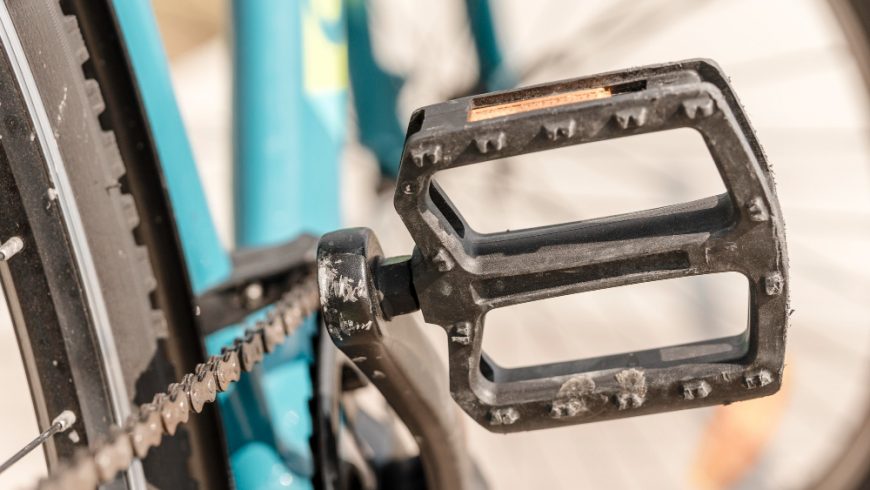
A loose or dry pedal thread clicks at the bottom of each stroke on that side. Remove the pedal, clean both threads, grease them heavily and refit it. Park Tool gives about 40 Nm as a typical pedal torque, roughly 60 lb of effort on a 6 in wrench; brand figures are in the torque table.
The right pedal tightens clockwise and the left counterclockwise; many are stamped L and R. For more on grease and pedal threads, see should you grease bicycle pedals.
If the thread is fine, spin the pedal on its axle. Roughness, a catch or side play means worn bearings; Park notes some pedals can be serviced and others are ridden until they wear out.
Cleats and shoes
Park Tool lists loose cleats as a noise source. Remove each cleat bolt, add a little grease or mild threadlocker, and tighten them fully to the cleat maker’s figure. Clean the cleat and the pedal’s contact surfaces, and put a drop of light lube on the pivot points of clipless pedals, as Park’s pedal guide advises. Worn cleats can click as they shift in the pedal; replace them when the walking surface is worn through.
On flat pedals, Park notes that a shoe lace can tap the crank arm and a rubber sole can squeak as it moves on the pedal.
Crank arms
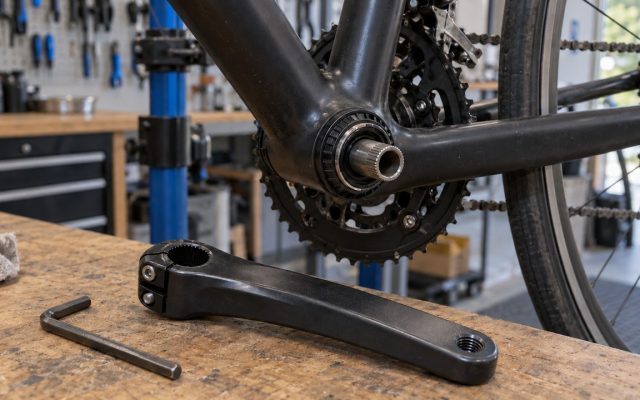
Park Tool calls a crank loose on its spindle a common cause of creaking. Remove the crank bolt, grease its threads and under its head, and refit it. Park gives 40 Nm as a typical crank bolt figure, but makers vary widely (see the torque table). SRAM DUB and other one-bolt, self-extracting cranks use their own, often higher figure, printed on the arm or in the crank manual; use that, not the 40 Nm typical figure.
Shimano Hollowtech II cranks are different: the left arm uses a small cap for preload and two pinch bolts that clamp the arm. Tighten the cap only enough to remove side play (Shimano: 0.7-1.5 Nm), then tighten the two pinch bolts evenly and in turn to the figure printed on the arm. Shimano’s dealer manual gives 12-14 Nm for Hollowtech II pinch bolts; Park’s chart lists FSA MegaExo at 9.8-11.3 Nm. A crank that keeps working loose after that may have damaged splines; have a shop look at it.
Chainring bolts
Check every bolt with a hex key, holding the nut on the back with a chainring nut wrench. Park suggests mild threadlocker or grease on the threads and gives 8-12 Nm for steel bolts, depending on the maker; aluminum bolts take less (see the torque table). Enduro Bearings says chainring bolts occasionally work loose, aluminum ones especially, and that aluminum bolts can crack; when in doubt, it suggests stainless steel bolts.
Cranks with a direct-mount chainring have no ring bolts. The ring is held by a lockring or by screws behind the arm. Park says these can creak if they are not fully tight: remove the crank, apply mild threadlocker to the lockring or screws, and tighten to about 40 Nm, or to the maker’s figure.
Bottom bracket
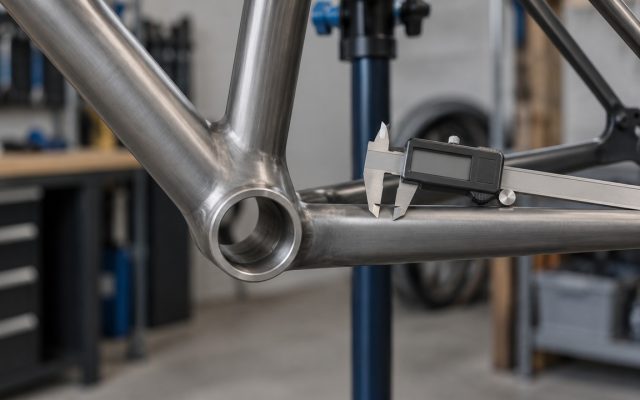
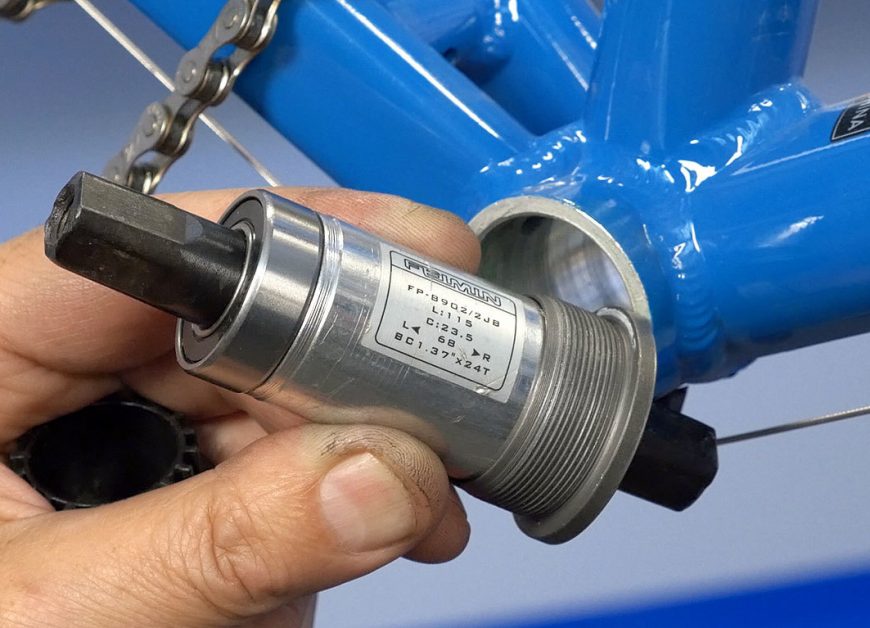
Pull the cranks and turn the bearings by hand: roughness or play means the bottom bracket needs replacing. On a threaded shell, cups that are not tight can move on their threads and creak. Park’s noise guide says to tighten them to at least 35 Nm; use the figure printed on your cups or in the maker’s manual.
Press-fit bottom brackets have no threads to tighten. If the cups or adapters fit loosely in the frame, they move under load and creak. Park’s fix is to refit them with a retaining compound, a bearing-press job best left to a shop.
Saddle and seatpost
If the noise stops when you stand, look here. Park Tool says a loose saddle can creak as the rails rock in the clamp, and that a seatpost can move slightly in the seat tube when the fit is marginal. Enduro Bearings says to clean the rails, the seatpost head and the inside of the seat tube, then use fiber grip or assembly compound; carbon posts and frames need carbon assembly paste, not grease.
If the saddle shell has come loose from its rails, Park says there is no repair: replace the saddle. For rail clamp torque by brand and clamp type, see why your bike seat keeps tilting.
Handlebar and stem
A creak when you pull on the bars often comes from dry stem bolts, which Park says may not hold the clamp tight. Grease each bolt’s threads and under its head, refit evenly, and use the torque printed on the stem; carbon bars and steerers can crack if overtightened.
A creak that only happens when you turn the bars is often a metal cable end cap moving inside its frame port. Park says lube is a temporary fix, and a thin shim can sometimes give the cap a tighter fit.
Headset
A loose headset knocks rather than clicks. Enduro Bearings says it sometimes shows when you stand on a climb, sprint or brake hard. On a threadless headset, loosen the stem pinch bolts, turn the top cap bolt in small steps until play just disappears (Park: the loosest setting with no play), then re-tighten the stem bolts. If play will not go away, the bearings may be worn, or the steerer may be too long for the stem; Park says to add a spacer under the stem.
Quick release and thru-axle
A loose quick release lets the wheel move under pedaling load, a creak source on Park’s list. Close it so the lever meets firm resistance at about 90 degrees from the frame, halfway through its swing. Enduro Bearings says external-cam skewers often make noise from a worn or dirty bushing; clean or replace them.
Thru-axle torque varies by maker; many print it on the axle or lever, otherwise check the fork or frame manual. Clean and grease the axle threads, push the wheel fully into the dropouts, and tighten it to spec.
Enduro also lists a loose or fatigued derailleur hanger and flaking paint where the axle meets the dropout. Tighten the hanger bolt and clean the contact faces of the dropouts.
Spokes and wheel
Park Tool explains that spokes lose some tension at the bottom of the wheel with every turn. If they are too loose, they can rub where they cross and creak. Squeeze pairs of spokes around the wheel; a much slacker one is suspect. Park considers every spoke within 20% of the average acceptable, and says most rims call for 100-120 kgf. Enduro Bearings suggests a drop of light oil where crossing spokes touch.
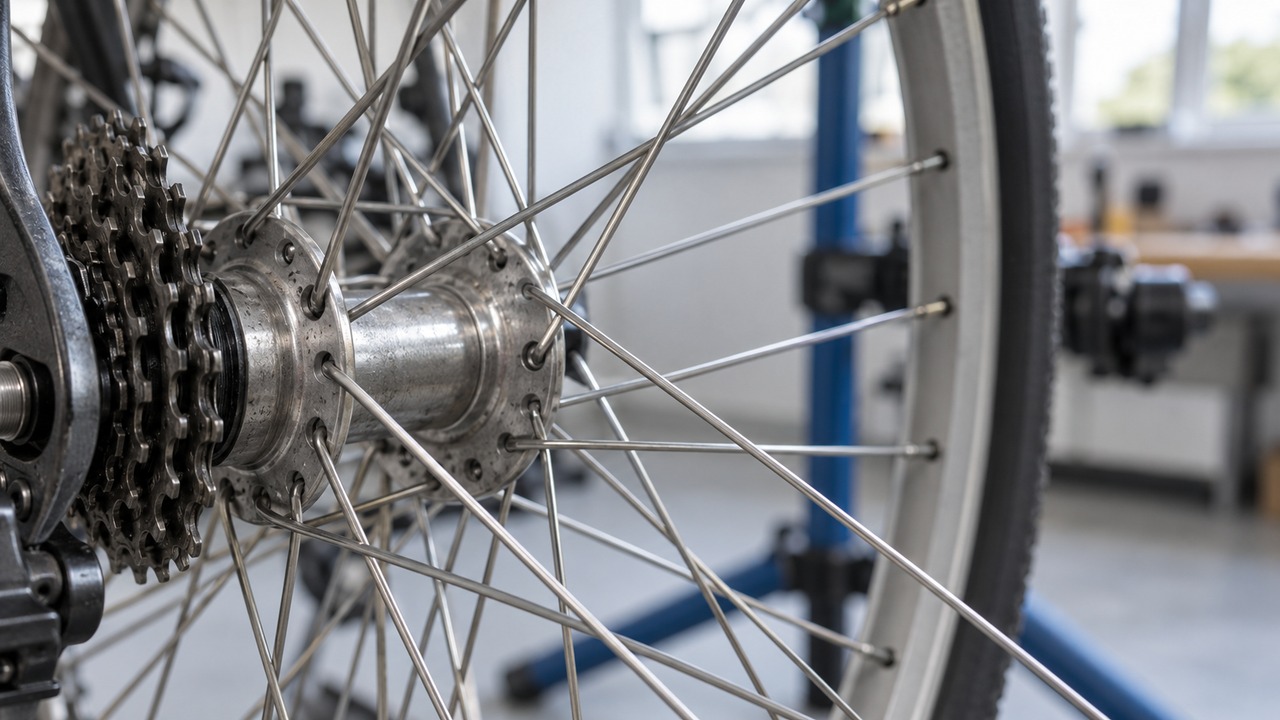
A tick once per wheel turn can also be a thorn in the tire, a rotor touching the pad in one spot, a computer magnet or a reflector. If the click sounds more like a squeal and only comes when you brake, see why bike brakes squeak.
Freehub and cassette
Coasting ticks are normal. Prevelo explains them as spring-loaded pawls in the rear hub clicking over a toothed drive ring; hubs with more pawls tick louder. Park Tool says freehubs wear out: pawls may slip and bearings turn rough. If cleaning and liquid lubricant do not cure slipping, sticking or noise, Park says to replace the freehub.
Park calls the rear cogs an unlikely creak source but worth checking: make sure the cassette lockring is tight, and look for burred or worn teeth, which can pop. Enduro Bearings adds that cassettes whose cogs are pinned to a carrier can creak and suggests oiling the pins.
Chain and derailleur
Park says a noise every 2-3 crank turns may be in the chain. It suggests oiling each roller and pedaling backward to spot a tight link hopping at the pulleys. Our bike chain slipping guide covers stiff links, indexing and worn cogs, which cause the ticking that comes and goes with your gear choice. Light oil on the two derailleur pulleys quiets them, according to Park.
A front derailleur that rubs only in the extreme gear combinations usually needs a trim click or a small limit screw adjustment.
E-bikes
On a mid-drive e-bike the motor sits where the bottom bracket would be, so a crank-area click can come from the motor. Check pedals, cleats, chainring and crank bolts first; if the noise stays, see the dealer and check the warranty before opening anything.
Torque quick reference
Park Tool’s figures for the fasteners behind most clicks and creaks. Use them when your part has no printed number; the maker’s manual wins.
| Fastener | Park Tool figure | Notes |
|---|---|---|
| Pedal into crank | About 40 Nm typical; Shimano 35 Nm minimum; Truvativ 31.2-33.9 Nm; Campagnolo 40 Nm | Grease threads; left pedal is reverse thread |
| Crank bolt (square taper, splined) | About 40 Nm typical; Shimano 34-44 Nm; Truvativ square taper 38-42 Nm | Grease threads and under the bolt head. Self-extracting (SRAM DUB and similar): use the figure on the arm |
| Hollowtech II left arm cap | 0.5-0.7 Nm | Preload only; pinch bolts set the clamp |
| Crank pinch bolts | Shimano Hollowtech II 12-14 Nm; FSA MegaExo 9.8-11.3 Nm | Tighten evenly and in turn; use the figure on the arm |
| Direct-mount chainring lockring or screws | About 40 Nm | Mild threadlocker; crank off |
| Chainring bolts, steel | Shimano 7.9-10.7 Nm; Campagnolo 8 Nm; Truvativ 12.1-14 Nm | Grease or mild threadlocker |
| Chainring bolts, aluminum | Shimano 5-10 Nm; Truvativ 8-9 Nm | Check for cracks; consider steel |
| Threaded bottom bracket cups | At least 35 Nm; Shimano Hollowtech II 34.5-49.1 Nm | Press-fit: retaining compound, not torque |
| Cassette lockring | Shimano 29.4-49 Nm; SRAM 40 Nm; Campagnolo 50 Nm | Grease the lockring threads |
| Quick release | No torque figure | Lever meets resistance about halfway through its swing |
| Stem, seatpost, saddle clamp, thru-axle | Use the torque spec finder | The value printed on the part is the final authority |
When to stop riding and see a shop
Most clicks are a nuisance. Stop and get help for these:
- A crack anywhere on the frame or fork. Park Tool says to stop riding and take the bike to a professional; once a crack forms, repair is often impractical.
- A crank arm that keeps coming loose after you have tightened it to spec. Park notes that riding a loose crank damages it.
- Headset or wheel play you cannot remove, or a broken spoke.
- Press-fit bottom bracket creaks and creaks from carbon parts you cannot torque with a proper wrench.
- A noise that comes back after every joint above is cleaned, greased and torqued, and any mid-drive motor noise.
Common questions
Why does my bike click only when I pedal hard?
Hard efforts flex the parts that carry your pedaling force, so loose joints click only under load: pedals, chainring bolts, crank arms, bottom bracket and rear axle. Check the pedals and chainring bolts first.
Why does my bike creak when I stand up?
Standing moves your weight from the saddle to the pedals and bars, so look at the crank area and cockpit: pedals and cleats, then crank and bottom bracket, then stem bolts and headset.
Is clicking when coasting normal?
Yes. A steady tick from the rear hub while coasting is the freehub pawls. Act only if it grinds, clunks, or the pedals slip when you start pedaling again.
Sources
- Park Tool, Troubleshooting a Noisy Drivetrain (2023): timing rule, crank, bottom bracket, chainring, axle, cleat, pedal, chain, pulley, spoke, end cap, frame, saddle, headset, cassette and stem causes.
- Park Tool, Torque Specifications and Concepts: torque chart for pedals, cranks, chainring bolts, bottom brackets, cassette lockrings and quick releases.
- Park Tool, Pedal Installation and Removal: thread direction, grease, clipless pivot lube, pedal bearing service.
- Park Tool, Cassette Removal and Installation: grease the lockring threads.
- Park Tool, Threadless Headset Service: play tests, brake-rock test caveats, adjustment.
- Park Tool, Wheel Removal and Installation: quick release closing, thru-axle installation.
- Park Tool, Spoke Tension Measurement and Adjustment: tension drop at the bottom of the wheel, 100-120 kgf, plus or minus 20%.
- Park Tool, Freehub Service: pawl wear, liquid lubricant, replacement.
- Park Tool, How to Remove and Install a Crank: two-piece cranks with a pinch-bolt left arm.
- Enduro Bearings, Bicycle Noise Diagnosis (PDF): frame-borne noise, quick four-part check, headset knock, aluminum chainring bolts, skewer bushings, derailleur hanger, dropout paint, spokes, seatpost.
- Prevelo, Knowledge Base: why hubs click when coasting.